

Showing posts with label Burbot. Show all posts

Friday, February 4, 2011

Variety of Fish at Utah Ice Fishing Waters


You have warm clothes and waterproof boots. Your ice fishing equipment is ready to go. And you have a basic idea of how to locate fish and catch them through the ice.

So what’s standing between you and a great ice fishing experience this winter?

Maybe only one thing: knowing which waters in Utah to fish.

Fortunately, dozens of waters across Utah provide good ice fishing year after year. “In my opinion, Utah has some of the best ice fishing in the country,” says Drew Cushing, warm water sport fisheries coordinator for the Division of Wildlife Resources. Cushing has fished through the ice in states across the country.

“Utah provides a wider variety of fish to catch than any place I know of,” he says. “And many of these opportunities are probably close to your home.”

Cushing gave Utah County as an example. If you live in the county, you can fish for white bass at Utah Lake in the morning, and then turn around and head to Strawberry Reservoir to catch trophy-sized cutthroat trout in the afternoon; all in the same day!

Fishing reports
Visiting the DWR’s fishing report is one way to learn which type of fish are in which waters and where fishing is the best.

DWR biologists, officers and outreach personnel update the report every one to two weeks. You can read the report at www.wildlife.utah.gov/hotspots .

Other Internet sources—such as utahwildlife.net and bigfishtackle.com—are also good places to visit. And don’t forget your local fishing tackle shop or sporting goods store—people who work at these stores are often the first ones to know about good fishing in their areas.

Cushing says the following waters are producing great fishing for the following fish:

Larger Yellow Perch
Fish Lake, and Rockport Reservoir


Smaller, but more abundant Yellow Perch
Pineview, Echo, and Starvation reservoirs --“Catching perch at Pineview can be fairly easy,” Cushing says. “Just locate the spot on the bottom where the perch are, and then put your bait in front of the fish.”


Larger Bluegill
Pelican Lake


Smaller, but more abundant Bluegill
Mantua Reservoir


Largemouth Bass
Pelican Lake, and Mantua Reservoir


Rainbow, Cutthroat, Brown or Tiger Trout
Deer Creek Reservoir

Strawberry Reservoir--“Strawberry provides fantastic fishing for big trout, and lots of them,” Cushing says.

Birch Creek Reservoir--“This water provides good fishing for big tiger trout,” Cushing says.

Lake Trout
Flaming Gorge Reservoir and Fish Lake--“You have a good chance to catch some big fish at these waters,” he says.


Burbot
Flaming Gorge Reservoir

Crappie
Pineview Reservoir--Cushing says crappie can be tricky to catch. “They suspend at various depths,” he says, “so they can be tough to find. “But if you catch a crappie at a certain depth, keep fishing that depth,” he says, “and you should do well. Pineview has a good population of crappie.”


Kokanee Salmon
Causey Reservoir, and Porcupine Reservoir--Cushing says the best ice fishing for kokanee salmon happens at the two waters at the start of the ice fishing season. “When ice first forms on these waters,” he says, “salmon fishing can be fantastic for about two to three weeks.”


White Bass
Utah Lake--This is another water where the best fishing happens early in the ice fishing season. “Fishing for white bass is usually best from the time the ice forms until about mid January,” Cushing says. “The harbors at the lake are the best places to catch them through the ice.”

Some of the best fishing of the year
Cushing says the arrival of winter doesn’t mean fishing is over until the spring. “Winter can be the most fun, the most productive and the least expensive time of the year to fish,” he says. “New lakes, new opportunities and new species of fish are out there for you to enjoy. Get out there, and take advantage of it.”

Wednesday, January 19, 2011

Map Revealed for Flaming Gorge Burbot Bash

Provided is the map for the upcoming Burbot Bash. This map is to be used as a tool to improve angler odds in catching a tagged fish for the competition.

Two state wildlife agencies and three chambers of commerce have teamed up to fight a finned invader in Flaming Gorge Reservoir.


Catching a burbot at this year's Burbot Bash could net you a cash prize. Their goal is to put some severe fishing pressure on burbot. To reach that goal, they've enhanced an annual event called the Burbot Bash.

Cash prizes
On Jan. 22, the Burbot Bash will become a formal fishing derby offering up to $10,000 in cash prizes. The event will also change from an event held on a weekend to an event that includes a full week of fishing.

A burbot with a tag on it could be worth up to $5,000. The longest burbot caught is worth $1,500. This year's event will also include a youth derby with its own set of prizes.

Helping biologists gather data
The two wildlife agencies—the Utah Division of Wildlife Resources (UDWR) and the Wyoming Game and Fish Department (WGFD)—have been marking burbot with small tags. Their goal is to tag 500 fish throughout Flaming Gorge Reservoir in northeastern Utah and southwestern Wyoming. Because the 91-mile-long reservoir crosses into both states, the biologists have too, working together as a team to catch burbot using nets and other methods.

When biologists catch a burbot, they record where the fish was caught and its length and weight. The fish is then tagged and released where it was caught. Hopefully, some of these fish will be caught by anglers during the Burbot Bash.

Because each tag is unique, the biologists can track any changes in individual fish that are recaptured during the Burbot Bash or later during the biologists' own surveys. Recapture data supplies biologists with vital information about the structure of the burbot population, movements of the fish, how long burbot in the reservoir are living and how much each fish has grown since it was first caught.

If this aspect of the Burbot Bash continues, the agencies will tag more fish, which will allow them to acquire more years of additional data.

Removing burbot is the ultimate goal
The ultimate goal of the agencies, however, is to remove as many burbot as possible. To help reach that goal, three chambers of commerce—Flaming Gorge, Green River and Rock Springs—have joined with the wildlife agencies to enhance this year's Burbot Bash.

The chambers have raised funds and are providing prizes, lodging discounts and other incentives to help attract anglers to the event.
Burbot Bash
The derby kicks off at the Buckboard Marina on Jan. 22 with an array of demonstrations and discussions about how to catch burbot and what to do with them after you've caught them. This part of the event is free. If you want to participate in the quest for prizes, you'll have to register and pay a fee.

After the Jan. 22 opener, anglers have a week to catch burbot and bring them to a checking station. (You need to follow all of the fishing regulations, so make sure you're familiar with the fishing regulations for the state in which you're fishing and have the proper licenses and permits.)

The final check will take place at the Manila Rodeo Grounds on Jan. 29. After the final check in, the prizes will be awarded.

Fishing regulations, and more information
You can learn more about the Burbot Bash and obtain registration forms at several locations, including www.flaminggorgeresort.com/attractions.php  and http://www.daggettcounty.org/  .

Fishing regulations, guidebooks and licenses can be found and bought at many stores and shops in the Flaming Gorge area.

Regulations and licenses are also available at http://www.wildlife.utah.gov/  and http://www.gf.state.wy.us/  

Friday, January 14, 2011

$10,000 in prizes at the Burbot Bash

Division of Wildlife Resources Photo

Vernal — Two state wildlife agencies and three chambers of commerce have teamed up to fight a finned invader in Flaming Gorge Reservoir.


Catching a burbot at this year's Burbot Bash could net you a cash prize. Their goal is to put some severe fishing pressure on burbot. To reach that goal, they've enhanced an annual event called the Burbot Bash.


Cash prizes
On Jan. 22, the Burbot Bash will become a formal fishing derby offering up to $10,000 in cash prizes. The event will also change from an event held on a weekend to an event that includes a full week of fishing.

A burbot with a tag on it could be worth up to $5,000. The longest burbot caught is worth $1,500.

This year's event will also include a youth derby with its own set of prizes.

Helping biologists gather data
The two wildlife agencies—the Utah Division of Wildlife Resources (UDWR) and the Wyoming Game and Fish Department (WGFD)—have been marking burbot with small tags. Their goal is to tag 500 fish throughout Flaming Gorge Reservoir in northeastern Utah and southwestern Wyoming. Because the 91-mile-long reservoir crosses into both states, the biologists have too, working together as a team to catch burbot using nets and other methods.

When biologists catch a burbot, they record where the fish was caught and its length and weight. The fish is then tagged and released where it was caught. Hopefully, some of these fish will be caught by anglers during the Burbot Bash.

Because each tag is unique, the biologists can track any changes in individual fish that are recaptured during the Burbot Bash or later during the biologists' own surveys. Recapture data supplies biologists with vital information about the structure of the burbot population, movements of the fish, how long burbot in the reservoir are living and how much each fish has grown since it was first caught.

If this aspect of the Burbot Bash continues, the agencies will tag more fish, which will allow them to acquire more years of additional data.


Removing burbot is the ultimate goal
The ultimate goal of the agencies, however, is to remove as many burbot as possible. To help reach that goal, three chambers of commerce—Flaming Gorge, Green River and Rock Springs—have joined with the wildlife agencies to enhance this year's Burbot Bash.

The chambers have raised funds and are providing prizes, lodging discounts and other incentives to help attract anglers to the event.


Burbot Bash
The derby kicks off at the Buckboard Marina on Jan. 22 with an array of demonstrations and discussions about how to catch burbot and what to do with them after you've caught them. This part of the event is free. If you want to participate in the quest for prizes, you'll have to register and pay a fee.

After the Jan. 22 opener, anglers have a week to catch burbot and bring them to a checking station. (You need to follow all of the fishing regulations, so make sure you're familiar with the fishing regulations for the state in which you're fishing and have the proper licenses and permits.)

The final check will take place at the Manila Rodeo Grounds on Jan. 29. After the final check in, the prizes will be awarded.


Fishing regulations, and more information
You can learn more about the Burbot Bash and obtain registration forms at several locations, including www.flaminggorgeresort.com/attractions.php  and http://www.daggettcounty.org/ .

Fishing regulations, guidebooks and licenses can be found and bought at many stores and shops in the Flaming Gorge area.

Regulations and licenses are also available at http://www.wildlife.utah.gov/  and http://www.gf.state.wy.us/ .

Tuesday, August 17, 2010

Burbot Captured In Green River

Photo by Ryan Mosley, Utah Division of Wildlife Resources

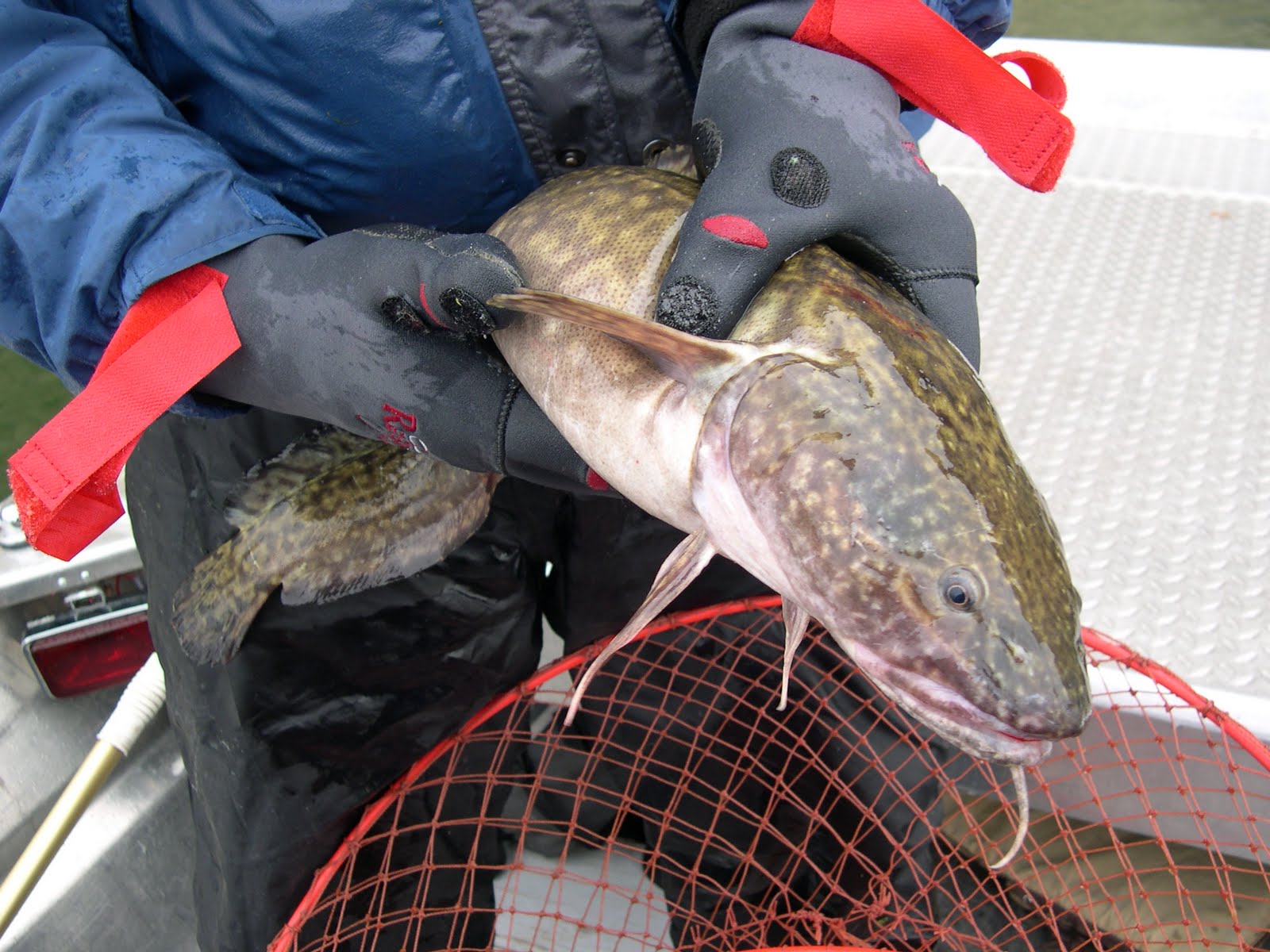
Vernal -- On July 28, researchers with the Utah Division of Wildlife Resources found something they didn’t want to find: a 21-inch burbot in the Green River below Flaming Gorge dam.

Burbot are a nonnative fish from east of the Rocky Mountains. The fish was captured during an electrofishing study to recover and study endangered fish in the Green and Colorado rivers.

“The burbot was captured from an electrofishing raft roughly 1.5 miles upstream of the Split Mountain boat ramp in Dinosaur National Monument,” says Paul Badame, UDWR native fish project leader. “This is the first capture of a burbot below Flaming Gorge dam that I’m aware of.”

The burbot likely came down the Green River after someone illegally introduced the species upstream in Big Sandy Reservoir in Wyoming. The burbot have worked their way downstream, bypassing dams at Big Sandy and Flaming Gorge.


Why the concern?
Burbot are a voracious predator, capable of breeding in both rivers and reservoirs. As a result, they can have a serious impact on both native and sport fish populations.

Biologists working on Flaming Gorge Reservoir have already noticed a rapid increase in the number of burbot in the reservoir and a corresponding decline in the number of kokanee salmon.

Burbot also pose a major risk to native fish in the Green River.

“We’re concerned that burbot will negatively impact endangered fish and other native fishes in the Green River,” says Krissy Wilson, native aquatic species coordinator for the UDWR. “We’ve seen this happen before with other nonnative fish, including northern pike, redshiner and smallmouth bass.”

Wilson says the UDWR and its partners in the Upper Colorado River Endangered Fish Recovery Program are working together to determine the best way to deal with this latest threat.


Catch and kill regulation
The UDWR has placed a ‘no tolerance’ fishing regulation on burbot in Utah: (There’s no limit on the number of burbot an angler can catch. Anglers may not release any burbot they catch.

All burbot must be killed immediately. For more information, call the UDWR’s Northeastern Region office at (435) 781-9453.

Monday, June 14, 2010

Biologists find big trout during Flaming Gorge Surveys


Dutch John -- Freezing temperatures and rising winds couldn’t keep Matt Breen and Calvin Black from breaking out in a big grin.

As they pulled the first lake trout out of the water that day, they knew the fish was a monster.

And was it ever: it weighed more than 29 pounds!

The two Utah Division of Wildlife Resources biologists were helping Ryan Mosley set and pull nets on the first day of the annual fisheries survey at Flaming Gorge Reservoir last May.

Mosley is the UDWR’s aquatic project leader at Flaming Gorge. Based on years of data, he and the other biologists say fishing should be good at the reservoir this year.

“The data hasn't been summarized [yet], but this year's catch shows a healthy population for anglers to target this fishing season,” Mosley says.

Mosley says rainbow trout were well represented in the nets. Many of the rainbows pushed 20 inches in length. They weighed about three pounds each.

“We also sampled 37 fish in our lake trout nets,” he says. “The fish looked good. The largest lake trout weighed 29.1 pounds, which is about the threshold the nets can handle.”

Mosley says the water in mid-May was too cold for smallmouth bass to show up in the nets.

So what are his recommendations for this year?

“Come out and enjoy the great fishing at the Gorge," he says. “The person who coined the phrase ‘Money can't buy you happiness’ never bought a Utah fishing license!”

Mosley also encourages you to take a limit of lake trout and smallmouth bass home with you. Reducing these predators will help the reservoir’s kokanee salmon, lake trout and smallmouth bass fisheries.

Also, please remember that you must kill and keep all the burbot you catch.


Trend netting
Since fish don’t voluntarily rise to the surface whenever biologists need to see them, researchers use a variety of techniques to catch fish so they can study them.

One of those techniques involves catching fish in nets.

“Gill netting has been used as a fisheries monitoring tool on Flaming Gorge since 1965, three years after it began filling,” Mosley says. “[The gill net monitoring] is a coordinated effort between the Utah Division of Wildlife Resources and the Wyoming Game and Fish Department.”

Although the methods biologists use have changed a little over the last 40 years, they still sample at the same sites, using the same type of nets and sampling at the same time of the year.

These standard procedures remove variability from the data they collect.

UDWR biologists currently sample at 10 sites. The sites extend from the Green River arm at the head of the reservoir, all the way down to Jarvies Canyon, about five miles from the dam.

Biologists set the nets each May when the water temperature reaches about 50 degrees Fahrenheit.

Comparing the results of a capture technique over time allows biologists to detect trends they may not see if they looked at data only from a single day. These trends include the size of the population, the health and condition of the fish and what the fish are eating.

Depending on these trends (and other trends collected using additional sampling tools), managers can make changes to address potential concerns. “For example, biologists observed an increase in the abundance of lake trout back in the 1990s and early 2000s,” Mosley says. “Unfortunately, they also noted a severe decline in the Utah chub population and a corresponding decline in [the number of kokanee salmon.]”

As the Utah chub declined, Mosley says the lake trout in Flaming Gorge started eating kokanee salmon. To address this population imbalance, the lake trout limit at the reservoir was liberalized.

The current regulation, which dates back to 2006, allows anglers to keep up to eight lake trout. But only one of those fish can be longer than 28 inches.

For more information about fishing at Flaming Gorge, call the UDWR’s Flaming Gorge office at 435-885-3164.