

Tuesday, August 17, 2010

BLM Issues Decision for Conger Complex Wild Horse Gather


Fillmore, Utah—The Bureau of Land Management’s Fillmore Field Office today issued a decision to remove excess wild horses from the Conger Complex Herd Management Area (HMA) near Garrison, Utah, to protect range conditions and wild horses. The Conger Complex HMA consists of the Conger and Confusion Mountain HMAs.

“The current population of wild horses in the Conger Complex is far above the number the range can handle,” said Field Office Manager Mike Gates. “Our horses are healthy and we want them to remain healthy. We must manage the population at appropriate levels to maintain an ecological balance on the range.”

Beginning in Sept. 2010, the BLM plans to gather and remove an estimated 480 wild horses for placement in the adoption program or long-term pastures. An estimated 50 studs of the captured wild horses from the Confusion Mountain HMA will be returned to the range to adjust the sex ratio and slow population growth. Up to 30 of the Conger Mountain HMA wild horses will be released (about 20 studs of the captured wild horses will be returned to the range to adjust the sex ratio and slow population growth and about 10 mares will be treated with fertility control and returned to the range). This will bring the population of horses to appropriate management levels established through the Warm Springs and House Range Resource Management Plans.

The Confusion Mountain HMA is located in Juab and Millard Counties 30 miles north of Garrison, Utah, and encompasses approximately 293,000 acres, with a current population estimated at 368 wild horses (based on a Feb. 2010 population inventory). The Appropriate Management Level (AML) for the Confusion Mountain HMA has been established at 70-115 wild horses. This means that 250 horses will need to be removed during the gather to achieve AML.

The Conger HMA is located in Millard County 20 miles northeast of Garrison, Utah, and encompasses approximately 170,000 acres, with a current population estimated at 291 wild horses (based on a Feb. 2010 population inventory). The AML for the Conger HMA has been established at 40-80 wild horses. This means that 230 horses will need to be removed during the gather to achieve AML.

AML is determined through land-use planning efforts that involve public participation, vegetation inventories and allocation of forage in terms of animal unit months; the BLM determines the appropriate number of wild horses and burros that each Herd Management Area can support in balance with other uses of and resources on public land. Planning efforts include an inventory and the monitoring of all uses of the public rangelands. “Animals removed from the HMA will be available for adoption through the BLM Wild Horse and Burro Adoption Program,” Gates said.

Those that are not adopted will be cared for in long-term pastures, where they retain their “wild” status and protection under the 1971 Wild Free-Roaming Horses and Burros Act. The BLM does not send any horses to slaughter.

More details on the gather and opportunities for public visitation will be available soon from the BLM. The gather and impacts are described and analyzed in the Conger Mountain Complex Wild Horse Gather Plan Final Environmental Assessment (EA). The EA and the Decision Record are posted on the BLM website at www.blm.gov/ut . The BLM also will provide updates and information at the same web address on a regular basis throughout the course of the gather.

To learn more about the program or to obtain an adoption application, visit the BLM National Wild Horse and Burro website at http://www.wildhorseandburro.blm.gov/ .

Share your ideas about the Otter Plan

A proposed plan that would guide how river otters are managed in Utah is now available and you can review it online.for review. The plan will guide how river otters are managed for the next 10 years.

Places to put river otters is one of the areas the new plan focuses on. Straight Canyon near Joes Valley Reservoir and the Weber River are two areas the former plan identified as possible sites.

"Under the new plan, we'd reevaluate those sites," says Justin Dolling, game mammals coordinator for the Division of Wildlife Resources. "We'd also take a look at additional sites that might be good places to put otters."


Share your ideas
After you've reviewed the plan at www.wildlife.utah.gov/public_meetings , you can let your Regional Advisory Council members know your thoughts by attending your upcoming RAC meeting or by sending an e-mail to them.

RAC chairmen will share the input they receive with members of the Utah Wildlife Board. The board will meet in Salt Lake City on Aug. 19, 2010 to approve the new otter plan.


E-mail
You can also provide your comments to your RAC via e-mail. E-mail addresses for your RAC members are available at wildlife.utah.gov/public_meetings.

The group each RAC member represents (sportsman, non-consumptive, etc.) is listed under each person's e-mail address. You should direct your e-mail to the people on the RAC who represent your interest.

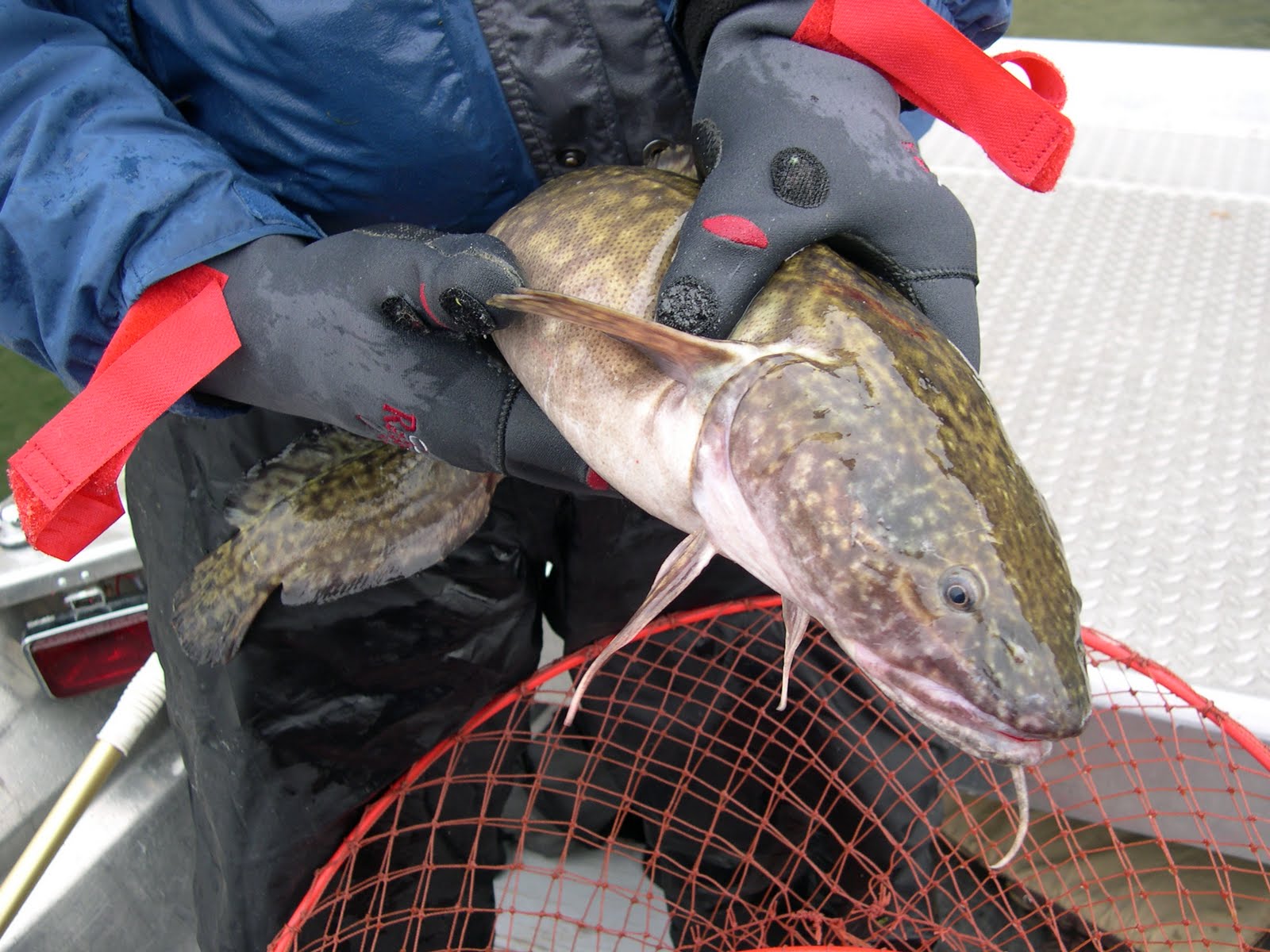
Burbot Captured In Green River

Photo by Ryan Mosley, Utah Division of Wildlife Resources

Vernal -- On July 28, researchers with the Utah Division of Wildlife Resources found something they didn’t want to find: a 21-inch burbot in the Green River below Flaming Gorge dam.

Burbot are a nonnative fish from east of the Rocky Mountains. The fish was captured during an electrofishing study to recover and study endangered fish in the Green and Colorado rivers.

“The burbot was captured from an electrofishing raft roughly 1.5 miles upstream of the Split Mountain boat ramp in Dinosaur National Monument,” says Paul Badame, UDWR native fish project leader. “This is the first capture of a burbot below Flaming Gorge dam that I’m aware of.”

The burbot likely came down the Green River after someone illegally introduced the species upstream in Big Sandy Reservoir in Wyoming. The burbot have worked their way downstream, bypassing dams at Big Sandy and Flaming Gorge.


Why the concern?
Burbot are a voracious predator, capable of breeding in both rivers and reservoirs. As a result, they can have a serious impact on both native and sport fish populations.

Biologists working on Flaming Gorge Reservoir have already noticed a rapid increase in the number of burbot in the reservoir and a corresponding decline in the number of kokanee salmon.

Burbot also pose a major risk to native fish in the Green River.

“We’re concerned that burbot will negatively impact endangered fish and other native fishes in the Green River,” says Krissy Wilson, native aquatic species coordinator for the UDWR. “We’ve seen this happen before with other nonnative fish, including northern pike, redshiner and smallmouth bass.”

Wilson says the UDWR and its partners in the Upper Colorado River Endangered Fish Recovery Program are working together to determine the best way to deal with this latest threat.


Catch and kill regulation
The UDWR has placed a ‘no tolerance’ fishing regulation on burbot in Utah: (There’s no limit on the number of burbot an angler can catch. Anglers may not release any burbot they catch.

All burbot must be killed immediately. For more information, call the UDWR’s Northeastern Region office at (435) 781-9453.

DWR Proposes Cougar Hunting Rules for the Next Three Years


If you’re interested in Utah’s cougars, pay attention to the Division of Wildlife Resource’s latest cougar hunting proposals—they’ll be in effect for the next three years.

”Keeping the hunting rules and permit numbers consistent will give our efforts to manage cougars more time to work,” says Kevin Bunnell, mammals coordinator for the DWR. “And that will result in future recommendations that will be best for the cougars and for the animals the cougars prey on.”

Utah’s cougar management plan was updated in 2009. This is the first season cougars will be managed under the new plan.

In addition to keeping the number of hunting permits consistent for three years, the plan gives biologists more direction on how to manage cougars on units that have bighorn sheep. It also provides more direction on how to manage cougars on units where the number of mule deer—the main animal cougars prey on—is still under the goal specified in unit management plans.

For the 2010 – 2011 season, biologists are recommending a slight increase in the number of cougars hunters can take. They estimate raising the number by about eight percent will result in hunters taking an average of about 325 cougars each season for the next three seasons.

Over the past three seasons, hunters took an average of 300 cougars each season.

(The state’s cougar management plan is available at www.wildlife.utah.gov/pdf/cmgtplan.pdf .)

Learn more, share your ideas
After you’ve reviewed the DWR’s cougar hunting proposals at www.wildlife.utah.gov/public_meetings , you can let your Regional Advisory Council members know your thoughts by attending an  upcoming meeting or by sending an e-mail to them.

RAC chairmen will share the input they receive with members of the Utah Wildlife Board. The board will meet in Salt Lake City on Aug. 19 to approve cougar hunting rules for the next three seasons.

E-mail
You can also provide your comments to your RAC via e-mail. E-mail addresses for your RAC members are available at www.wildlife.utah.gov/public_meetings .

The group each RAC member represents (sportsman, non-consumptive, etc.) is listed under each person’s e-mail address. You should direct your e-mail to the people on the RAC who represent your interest.

Monday, August 16, 2010

Tips for a Safe Archery Hunt

If you’re an archery hunter, you can stay safe during this year’s archery hunts by following a few, simple rules.

Utah’s general archery buck deer and elk hunts kick off Aug. 21.

“Every year, we receive reports of archery hunters injuring themselves,” says Gary Cook, hunter education coordinator for the Division of Wildlife Resources.

Two practices lead to most of the accidents: not being safe in tree stands or having arrows out of your quiver when you shouldn’t.

Cook provides the following advice to help you avoid these accidents:

1) Tree stands - before you climb a tree, make sure it’s large enough to hold your weight.

To lessen the chance that you’ll fall while climbing the tree, leave your bow, arrows and other equipment on the ground, and attach a hauling line to them. After you’ve climbed into your tree stand, attach your safety harness. Then use your hauling line to lift your gear to you.

Cook also recommends using a portable tree stand, rather than building a “permanent” one. “Permanent tree stands can deteriorate and become unsafe,” he says. “Also, they don’t look good. And you can damage the tree by hammering nails into it.”

2) “Until you’re ready to shoot, keep your arrows in a quiver that has a hood on it that covers the broadheads,” Cook says. “One of the most common accidents we see is archers jabbing themselves or other hunters while carrying arrows in their hand that should be in their quiver.”

State law requires that arrows be in a case while the arrows are in or on a vehicle. When you’re outside your vehicle, it’s up to you to protect yourself.

More tips
In addition to the safety tips, Cook provides tips on getting prepared for the season, safety items to remember while you’re in the field and tips on tracking animals and preserving their meat.


1) Preparation -
a. equipment checks - make sure the laminations on your bow are not flaking or separating and that the strings on your bow are not fraying. And if you have a compound bow, make sure the pulleys and cables are in good shape. Also, make sure your arrow’s spline (the stiffness of the arrow’s shaft) matches your bow’s draw weight. If your bow’s draw weight produces more force than your arrow can handle, your arrow will probably fly off target when you shoot.

b. broadhead sharpening – when you sharpen your broadheads, be careful and take your time. Your broadheads should be razor sharp, but make sure you don’t cut yourself while sharpening them.

c. practice shooting as much as possible.

d. obtain written permission from private landowners before hunting on their property or using their property to access public land.

e. know the boundaries of limited entry units and other restricted areas in the area you’ll be hunting.


2) Never take a shot at a deer or an elk that is beyond the maximum, effective range you’re comfortable shooting at. Also, before releasing your arrow, make sure of your target and what’s beyond it.


3) After the shot -
a. watch the animal and determine the direction it took. Then go to the spot where you last saw the animal and find your arrow. If there’s blood on it, and if you have a compass, take a reading of the direction the animal went. Then wait 30 minutes before tracking it. If you track the animal too soon, you can spook it into running. If you wait 30 minutes before tracking it, you’ll find most of the deer and elk you shoot dead within a reasonable distance of your starting point.


b. when you track an animal, look for blood not only on the ground but on the brush too. If you begin to lose the animal’s trail, tie a piece of biodegradable paper near the last blood spot. Then search for the animal’s trail by walking a circular pattern out from the paper. The paper will serve as a marker that will let you know where you started.

Also, tying paper at the locations of the last three or four spots you see, and then standing away from the paper and looking at the paper trail, can help you visualize the direction the animal took.


c. once you’ve found the animal, check to see if its eyes are open. If they’re not, the animal probably isn’t dead. If its eyes are open, touch one of the eyes with a long stick. That will keep you out of harm’s way if the animal is still alive. Once the animal is dead, field dress and cool its meat immediately. It’s usually warm during the archery hunt. The warm temperatures can cause the meat to spoil quickly.


Cook also provides tips for reducing conflicts with homeowners and those who don’t hunt:

1) Find access points to your hunting area well in advance of the season.

2) If access requires crossing private land, you must obtain written permission from the landowner. If you can’t obtain written permission, find another access point.

3) Before you start hunting, make sure you’re well beyond the minimum distances you must maintain from roads and dwellings. If you’re going to hunt in Salt Lake County, please remember that the county’s hunting restrictions are more restrictive than the rest of Utah. Read the 2010 Big Game Guidebook closely for more information.

4) Avoid hunting in areas that a lot of people use. Also, whenever possible, avoid hunting near heavily used trails.

“Most of the people in Utah choose not to hunt. But they support hunting as long as hunters are legal, safe and ethical,” Cook says. “When hunters don’t behave that way, how people feel about hunting can take a turn for the worse.”


Extended archery areas
If you want to hunt the Wasatch Front, Ogden, Unitah Basin or Sanpete Valley extended archery areas, please remember the following:

1) Before hunting any of these areas, you must complete the DWR’s Extended Archery Orientation Course. The free course is available online at wildlife.utah.gov/huntereducation.

2) While hunting in an extended archery area, you must carry two items with you: your 2010 statewide general archery buck deer permit and your Extended Archery Orientation Course certificate. If you’re a member of the Dedicated Hunter program, you must also carry your Dedicated Hunter certificate of registration.

For more information, call the nearest Division of Wildlife Resources office or the DWR’s Salt Lake City office at (801) 538-4700.

Tubers and Floaters require Life Jackets


Salt Lake – Utah State Parks and Recreation Boating Managers report a large increase in tubers on local rivers and want to remind these non-traditional boaters they must comply with life jacket laws. Utah State Parks Boating Rangers plan to increase their presence at local rivers to urge compliance and prevent drownings.

Inner tubes, air mattresses and all other flotation devices are considered boats when they are used to carry people down a river. Therefore, Utah law requires tubers and floaters to wear a properly-sized, approved and fastened life jacket.

Nationally, approximately 700 people drown each year from recreational boating accidents and the simple act of wearing a life jacket can drastically reduce this number. Much like a helmet to a cyclist, life jackets are an essential part of boating safety equipment and should be worn at all times.

Life jackets are no longer the orange, hot and bulky vests that are commonly associated with on-the-water safety gear. New innovations and developments in life jackets have produced smaller, sleeker, and much more comfortable versions.

Wear on the Boat
Although many boaters often stow life jackets on their boats, very few choose to wear them. Nearly 80 percent of drowning victims were not wearing a life jacket.


“In the event of an accident, there is not enough time to grab a life jacket and put it on properly before you are in the water,” stated Utah State Parks Assistant Boating Program Manager Chris Haller. “If faced with strong currents or unfavorable weather conditions, you will not only have trouble securing your life jacket, but will be unable to help passengers on your boat.”

Passengers 12 and younger must wear a properly-sized and US Coast Guard approved life jacket when the boat is in operation. However, it is a good, safe boating practice for everyone to always wear a life jacket.

For additional boating safety information go to http://www.stateparks.utah.gov/  or call (801) 538-BOAT. Wear it Utah!

Gourd Craft Workshop at Frontier Homestead State Park Museum


Cedar City –Frontier Homestead State Park Museum hosts a two-day gourd craft workshop August 21 at 9 a.m. Participants receive an introductory lecture regarding gourd history, learn the fundamentals of growing and drying gourds, and learn basic use of tools. Students select, design, and finish a gourd piece to take home, as well as an extra, unfinished gourd they can work on at home.

Workshop is limited to 15 participants and early registration is encouraged. The cost of this workshop is $50 per person and covers all materials and supplies. The museum is located at 635 North Main in Cedar City. To register or for more information, please call (435) 586-9290.