Showing posts with label Public Comment. Show all posts
Friday, June 10, 2011
DWR To Host Fisheries Open House
The Utah Division of Wildlife Resources will host a Public Open House regarding fisheries management on Tuesday, June 14th from 7:00 p.m. to 9:00 p.m. at DWR’s Central Region Conference Center located at 1115 North Main Street in Springville. The open house meeting is being held to give people interested in fisheries/aquatic resource management, a chance to talk directly with DWR staff and give input and suggestions on regulations, the fishing guidebook and fisheries management in general.
Sportfish biologists, native species biologists, Strawberry Reservoir Project Leaders and other staff from the DWR’s central region office will be on hand to gather input, suggestions and ideas from the public. The open house has no formal agenda, presentations or speakers other than to introduce the format of the open house and briefly present some recommendations already formalized on statewide issues. Verbal, written and electronic comments and suggestions are encouraged and will be gathered by DWR staff and recorded.
Monday, November 29, 2010
More Chances to Hunt Bears
DWR presents ideas for 2011 hunts
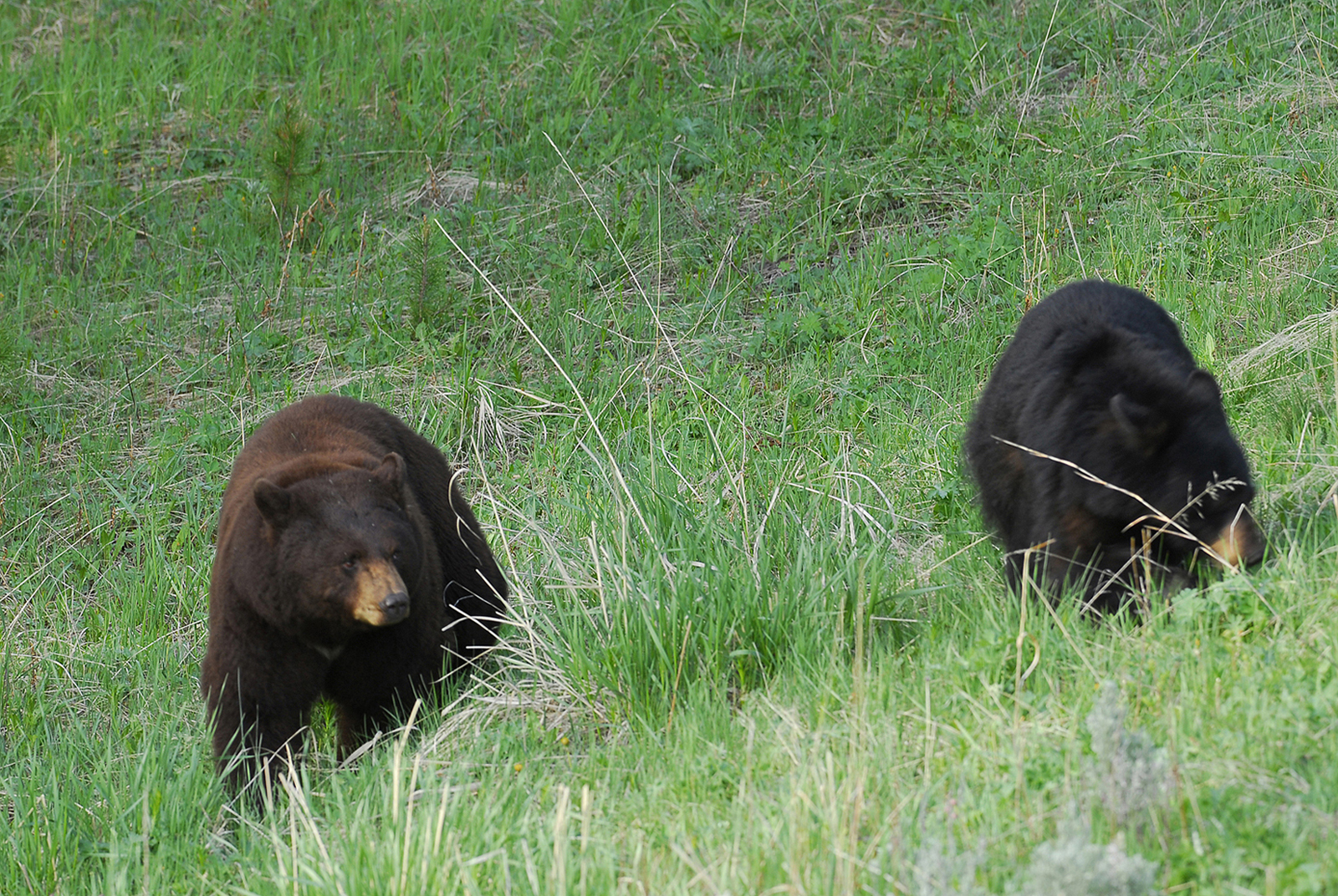
By all indications, black bears in Utah are doing well. And that means hunters might have a few more chances to hunt bears in 2011.
The following are among the changes Division of Wildlife Resources biologists are recommending for Utah’s 2011 bear hunts:
A total of 419 hunting permits. That’s 53 more than the 366 offered in 2010. About 40 percent of those who draw a bear-hunting permit end up taking a bear. The extra 53 permits should result in hunters taking about 180 bears in 2011. In 2010, hunters took 158 bears.
Forty one of the 419 permits would be premium-limited-entry permits. If they didn’t take a bear during the spring hunt, those who drew one of the 41 premium-limited-entry permits could hunt bears again during the fall hunt.
Extending the spring hunting season for one week on three additional bear management units in the state.
The South Slope, Yellowstone unit and the South Slope, Vernal, Diamond Mountain, Bonanza unit in northeastern Utah, and the Central Mountains, Manti-North unit in central Utah, are the three units biologists are considering.
Currently, six units in Utah have a hunting season that’s one week longer than the rest of the units in the state. The extended season usually runs from early April through the first week in June.
Allowing those who draw a fall spot-and-stalk permit for the Book Cliffs, Little Creek unit to hunt from August through November. 2010 was the first year a spot-and-stalk bear hunt was held on the unit. To avoid conflicts with big game hunters, bear hunters were not allowed to hunt on the unit in October. But very few deer hunters are allowed to hunt the unit, and the DWR is not aware of any conflicts that occurred between deer and bear hunters. For that reason, DWR biologists would like to give spot-and-stalk bear hunters a chance to hunt on the unit in October too.
(Spot-and-stalk hunters may not use hounds to track and tree bears, and they may not use bait to try to lure bears in.) The Book Cliffs, Little Creek unit is in the roadless area in the BookCliffs.
Bears are doing well
Three main factors help DWR biologists decide how many hunting permits they should recommend each year. Those factors include the average age of the bears hunters take, the percent of those bears that are females and the number of adult bears that are surviving from year to year.
Justin Dolling, game mammals coordinator for the DWR, says as long as targets relating to those factors aren’t exceeded, biologists know the state’s black bear population is doing well. “And those targets haven’t been exceeded for several years,” he says.
You can see all of the DWR’s black bear recommendations at www.wildlife.utah.gov/pub After you’ve reviewed the recommendations at www.wildlife.utah.gov/public_meetings , you can let your Regional Advisory Council members know your thoughts by attending your upcoming RAC meeting or by sending an e-mail to them.
A plan that will guide how black bears are managed in Utah for the next 12 years is also available for review.
You can read the proposed plan at www.wildlife.utah.gov/public_meetings . The following are among the plan’s highlights:
Currently, most bear hunters in Utah use hounds to track and tree bears. While hunting with hounds would continue under the new plan, some areas of the state may become spot-and-stalk-only areas. Hounds may not be used during spot-and-stalk hunts.
To help biologists focus hunters on bears that are killing livestock and raiding campgrounds, the new plan would create harvest-objective areas.
Currently, all of Utah’s bear hunting areas are limited-entry areas. Only those who draw a permit for a limited-entry area can hunt on it. Under the new plan, some of the limited-entry areas would become harvest-objective areas. The number of hunters who can hunt on a harvest-objective area isn’t limited, so switching an area to harvest objective would increase the number of people who can hunt the area. Letting more hunters hunt an area would increase the chance that a set number of bears were taken.
As soon as the set number of bears was taken (called the area’s quota), the hunt on the area would end for the season.
Bait could still be used by archery hunters to lure bears in close enough for a clean and effective shot.
Currently, three factors are used to determine the health of Utah’s bear population -- the percentage of females taken by hunters, the average age of the bears taken and the number of adult bears that survive from year to year.
The new plan would eliminate these three factors. In their place, the key factors would be:
• The number of females and the number of adult males that hunters take. (An adult male bear is a bear that’s five years of age or older.) Justin Dolling, game mammals coordinator for the Division of Wildlife Resources, says the number of females and adult males that hunters take gives important information about how a bear population is doing.
“The number of females is important because females give birth to and care for the cubs,” Dolling says. “But the number of adult males hunters take is the best early indicator we have about the health of a bear population.”
Dolling says hunters usually find adult males because adult males wander more than the other age groups. “You know a bear population is in decline if the number of adult males hunters take is going down and the number of females is going up,” he says.
• Results from two important bear studies would also be used in the new management system.
One study involves snagging hair from bears at sites across Utah and then using DNA tests to determine how often bears are visiting the research sites. This study is helping biologists determine the total number of bears in Utah and helping them measure the growth rate of the state’s population.
The second study involves visiting bear dens in the winter to see how many cubs are in the dens and to assess the health of the cubs and their mothers. This study is giving biologists important information about the number of bears that are being brought into Utah’s population each year.
RAC chairmen will share the input they receive with members of the Utah Wildlife Board. The board will meet in Salt Lake City on Jan. 4 to approve bear hunting and pursuit rules for Utah’s 2011 seasons.
Dates, times and locations for the RAC meetings are as follows:
Southern Region
Dec. 7
7 p.m.
Beaver High School
195 E. Center St.
Beaver
Southeastern Region
Dec. 8
6:30 p.m.
John Wesley Powell Museum
1765 E. Main St.
Green River
Northeastern Region
Dec. 9
6:30 p.m.
Bingham Entrepreneurship and Energy Research Center
320 N. Aggie Blvd. (2000 W.)
Vernal
Central Region
Dec. 14
6:30 p.m.
Central Region Conference Center
1115 N. Main St.
Springville
Northern Region
Dec. 15
6 p.m.
Brigham City Community Center
24 N. 300 W.
Brigham City
You can also provide your comments to your RAC via e-mail. E-mail addresses for your RAC members are available at www.wildlife.utah.gov/public_meetings .
The group each RAC member represents (sportsman, non-consumptive, etc.) is listed under each person’s e-mail address. You should direct your e-mail to the people on the RAC who represent your interest.
Wildlife Board will make final deer hunting decision on Dec. 2
Salt Lake City -- After a series of public meetings, the state’s Regional Advisory Councils are split over which deer hunting option they prefer.
The Utah Wildlife Board will make the final decision when it meets in Salt Lake City on Dec. 2. Right now, the board is considering three options.
The Dec. 2 meeting is open to the public. You’re invited and encouraged to attend.
Dec. 2 meeting
The Dec. 2 meeting begins at 9 a.m. at the Department of Natural Resources, 1594 W. North Temple in Salt Lake City.
The following items are available to help you understand the issues and prepare for the meeting:
The three options the board is considering are available at www.wildlife.utah.gov/dwr/2011-deer-changes.html .
Written minutes and audio recordings of the recent RAC meetings are available at www.wildlife.utah.gov/dwr/rac-minutes.html .
Jim Karpowitz, director of the Division of Wildlife Resources, has written a letter to Utah’s deer hunters. His letter explains the current status of mule deer in Utah and what the future holds for these animals. You can read the letter at
www.wildlife.utah.gov/dwr/2011-deer-changes/director-message.html .
At the bottom of Karpowitz’s letter, you'll find links to several mule deer-related items on the DWR’s website.
Dec. 1
On Dec. 1, the Wildlife Board will meet in an executive work meeting to prepare for the Dec. 2 meeting. You’re invited to attend the Dec. 1 meeting too. But public comment will NOT be accepted at the Dec. 1 meeting. The Dec. 1 meeting begins at 1 p.m. in the auditorium at the Department of Natural Resources.
For more information about the two meetings, call the DWR’s Salt Lake City office at (801) 538-4700.
Friday, October 29, 2010
DWR presents options for 2011 deer hunt
If you like to hunt deer in Utah, you need to let the Utah Wildlife Board know which hunting option you want the board to pass.
The Division of Wildlife Resources will present some major changes for the 2011 hunt at public meetings in November. Those changes could affect the number of bucks you see and the ability you and your family have to hunt.
You can learn about the proposed changes by visiting this Web page— www.wildlife.utah.gov/dwr/2011-deer-changes.html .
Anis Aoude, big game coordinator for the DWR, says the proposed deer hunting changes are the biggest proposed in Utah in almost 15 years. “What’s decided could change deer hunting as we know it,” Aoude says.
Three options
The DWR will present three options.
Option 3 is similar to the way deer hunting happens in Utah today (see www.wildlife.utah.gov/dwr/2011-deer-changes.html for details). The following are highlights from the other two options:
Raising the number of bucks compared to the number of does is the goal of both options.
The current goal is to manage Utah’s general season areas so biologists find at least 15 bucks per 100 does after the hunting seasons are over in the fall. Both of the new options would raise that goal to 18 bucks per 100 does.
Raising the number of bucks per 100 does requires reducing the number of bucks hunters take during the general season hunt. And there’s only one effective way to do that—reduce the number of hunters.
Option 1 is the DWR’s preferred option. Under this option, general season hunting would continue within the five regions Utah currently has. But areas within a region that have very low buck-to-doe ratios would be managed separately from the rest of the region.
Increasing the regional buck-to-doe average to at least 18 bucks per 100 does would require reducing the total number of hunters by about 7,000.
Currently, 94,000 hunters are allowed to hunt.
Because 7,000 fewer permits would be offered, the permits that are available might cost more.
Under Option 2, the state would be split into 29 separate hunting areas. These areas would be called units. The units would be managed on an individual basis so at least 18 bucks per 100 does were found on each unit after the hunts were over in the fall. Reaching at least 18 bucks per 100 does on each of these smaller units—instead of an average of 18 bucks per 100 does on a larger, regional basis—would require a deeper cut in permits.
About 13,000 fewer hunters would be allowed to hunt under Option 2. And permits would probably cost more.
Two other notes about Option 2:
The state’s Dedicated Hunter program would change under Option 2. The program would probably become a one-year program. Before you could join the program, you’d have to draw a permit for the unit you wanted to hunt. After getting a permit and joining the program, you’d be allowed to hunt all three seasons—archery, muzzleloader and rifle—on the unit you drew a permit for.
Under Option 2, it’s likely that archery hunters would be required to hunt within a single unit. Currently, archery hunters can hunt statewide.
Learn more, share your ideas
After visiting www.wildlife.utah.gov/dwr/2011-deer-changes.html , you can let members of your Regional Advisory Council know which option you prefer either of the following ways:
Public meetings
Five public meetings will be held starting Nov. 9. Dates, times and locations are as follows:
Northern Region
Nov. 9
6 p.m.
Brigham City Community Center
24 N. 300 W.
Brigham City
Central Region
Nov. 10
6:30 p.m.
Springville Junior High
165 S. 700 E.
Springville
Southern Region
Nov. 16
5 p.m.
Beaver High School
195 E. Center St.
Beaver
Southeastern Region
Nov. 17
6:30 p.m.
John Wesley Powell Museum
1765 E. Main St.
Green River
Northeastern Region
Nov. 18
6:30 p.m.
Western Park
302 E. 200 S.
Vernal
You can also provide your comments to your RAC via e-mail. E-mail addresses for the members of the RACs are available at www.wildlife.utah.gov/public_meetings .
The group each RAC member represents (sportsman, non-consumptive, etc.) is listed under each person’s e-mail address. You should direct your e-mail to the people on the RAC who represent your interest.
Dec. 2 is the day of decision
Members of the Utah Wildlife Board will use the public input they receive directly and through the RACs to decide which of the three options to approve.
Members of the board will make their decision when they meet Dec. 2 in Salt Lake City.
Wednesday, October 6, 2010
Public Comment sought on Territorial Statehouse Draft Plan
Salt Lake City - Utah State Parks and Recreation is seeking public comment on the draft resource management plan (RMP) for Territorial Statehouse State Park Museum in Fillmore, Utah through Thursday, November 4.
The draft RMP identifies issues relating to public use, future development, and operational efficiency for the next five to 10 years. A planning team consisting of park visitors, area residents, other agency representatives and park employees developed the draft plan through a series of team and public meetings.
Comments will be accepted through Thursday, November 4 by:
E-mail:
planscomment@utah.gov
Mail:
Utah State Parks: Planning Section
P.O. Box 146001
1594 West North Temple, Suite 116
Salt Lake City, UT 84114-6001
Friday, October 1, 2010
Changes Could Lead to Fewer People Hunting Deer
Members of the Utah Wildlife Board want hunters to see more buck deer during Utah's general hunts. That goal has led the Division of Wildlife Resources to put on hold big game hunting ideas that's been shared with hunters over the past several months.
Instead, the DWR will present some new ideas. The goal of these ideas is to increase the number of bucks per 100 does on Utah's general-season units.
To increase the number of bucks per 100 does, fewer people would be allowed to hunt in some areas of the state. The discussion that led to the changes happened at the board's Sept. 22 executive work meeting. You can read the minutes of the meeting at www.wildlife.utah.gov/dwr/board-minutes.html. The minutes should be available by Oct. 7.
Details available by late October
The DWR is still working out the details of the new idea, but the idea would likely involve the Wildlife Board amending Utah's statewide deer management plan. Those amendments would likely raise the average number of bucks per 100 does that DWR biologists must manage for.
Instead of an average of 15 bucks per 100 does, biologists would likely have to manage general-season areas so an average of 18 bucks per 100 does was found after the fall hunting seasons were over.
Two ideas to reach that goal have emerged so far.
Under a proposal the DWR is formulating, general deer hunting would likely continue in the five deer hunting regions Utah currently has. If the number of bucks per 100 does fell below preset levels on units or subunits within the regions, however, hunting on those specific units would be allowed only on a limited basis.
A second idea that's been proposed would likely result in the regions being divided into smaller units. All hunters -- archery, muzzleloader and rifle -- would be allowed to hunt on only one of up to 29 smaller units in the state.
Both ideas have one thing in common -- fewer hunters would be allowed to hunt in some areas of the state. All of the details should be worked out by the end of October, says Anis Aoude, big game coordinator for the DWR.
Once the proposals have been finalized, you can read the proposals at http://www.wildlife.utah.gov/ .
After you've read the proposals, you can provide your comments at Regional Advisory Council meetings in November. You can also provide your comments directly to your RAC members via e-mail. Members of the Wildlife Board will decide which option to approve when they meet Dec. 2 in Salt Lake City.
Saturday, August 28, 2010
Biologists recommend reduced Bass Limits for 2011
Photo by the Utah Division of Wildlife Resources
Many of Utah’s anglers aren’t happy about the size of the bass they’re catching. Division of Wildlife Resources biologists have an idea to fix the problem: get more anglers who are willing to keep fish involved in bass fishing.
All of the DWR’s proposed fishing changes for the state’s 2011 fishing season should be available at www.wildlife.utah.gov/public_meetings starting Aug. 23.
Learn more, share your ideas
After you’ve reviewed the ideas, you can let your Regional Advisory Council members know your thoughts by attending your upcoming RAC meeting or by sending an e-mail to them.
RAC chairmen will share the input they receive with members of the Utah Wildlife Board. The board will meet in Salt Lake City on Sept. 23 to approve rules for Utah’s 2011 fishing season.
Dates, times and locations for the RAC meetings are as follows:
Southern Region
Sept. 7, 7 p.m.
Richfield High School
510 W 100 S, Richfield
Southeastern Region
Sept. 8, 6:30 p.m.
John Wesley Powell Museum
1765 E Main Street, Green River
Northeastern Region
Sept. 9, 6:30 p.m.
Uintah Basin Applied Technology College
450 N 2000 W, Vernal
Central Region
Sept. 14, 6:30 p.m.
Springville Junior High School
167 S 700 E, Springville
Northern Region
Sept. 15, 6 p.m.
Brigham City Community Center
24 N 300 W, Brigham City
You can also provide your comments to your RAC via e-mail. E-mail addresses for your RAC members are available at www.wildlife.utah.gov/public_meetings .
The group each RAC member represents (sportsman, non-consumptive, etc.) is listed under each person's e-mail address. You should direct your e-mail to the people on the RAC who represent your interest.
Smaller Bass Limits
Reducing the number of bass limits in Utah—from eight major limits to two—is the idea biologists have to get more anglers involved in bass fishing.
Specifically, biologists are recommending the following:
- A limit of six bass—with no size restrictions—at most of Utah's bass waters.
- Five reservoirs—Jordanelle, Quail Creek, Sand Hollow, Gunlock and Huntington North—would also have a six-bass limit. But only one bass in that six-bass limit could be longer than 12 inches.
Biologists would also like to simplify the bass limits at Lake Powell and Flaming Gorge. But they need to do additional work with biologists in Arizona and Wyoming to make that happen.
More anglers, bigger bass
If you think of Utah's bass fishing waters as a big cookie jar, it helps to understand why they have so many small fish: with the exception of Lake Powell, anglers are keeping only four percent or less of the total adult bass population at Utah's bass waters every year.
They're releasing at least 96 percent of the bass they catch.
The amount of room in the cookie jar is limited. You can fill the jar with lots of small crumbs, or you can fill it with a few cookies. But there isn't room in the jar for both. "Right now, many of Utah's bass waters are filled with bass in the nine- to 12-inch range," says Drew Cushing, warm water sport fisheries coordinator for the DWR.
"Anglers need to remove more of the smaller bass to make room for bigger fish. The smaller fish are eating most of the food and utilizing most of the cover."
Cushing says the new limits should benefit all bass anglers, ranging from those who are new to bass fishing to those who have fished for years.
"Beginning anglers aren't as concerned about catching a big fish," Cushing says. "They're happy with smaller fish. And they want a chance to keep some fish."
Cushing says it's tough to get new anglers interested in bass fishing when the state has eight different bass limits, including some that are fairly restrictive. "If we can reduce the number of bass limits, make the limits easier to understand and give anglers a chance to keep some fish, we think more anglers will give bass fishing a try."
And that, in turn, should lead to bigger fish to catch.
Four waters and big bass
Cushing says Jordanelle, Quail Creek, Sand Hollow and Gunlock are four waters biologists believe have the potential to grow large bass. Allowing anglers to keep six bass—but limiting them to not more than one bass longer than 12 inches—should keep plenty of big bass in these waters.
Cushing says that won't happen, though, unless those who fish the waters are willing to keep bass that are less than 12 inches long. "If they don't take some of the smaller bass, it will be difficult for the bass to grow to a larger size," he says.
Cushing says the regulation at Huntington North should give bass in the reservoir some extra protection. "The water level at the reservoir fluctuates a lot," he says. "In fact, water levels in all of our bass waters are the limiting factor facing bass in Utah. Good water years mean great fishing. Poor water years mean poor fishing."
For more information, call the nearest Division of Wildlife Resources office or the DWR's Salt Lake City office at 801-538-4700.
Tuesday, August 17, 2010
Share your ideas about the Otter Plan
A proposed plan that would guide how river otters are managed in Utah is now available and you can review it online.for review. The plan will guide how river otters are managed for the next 10 years.
Places to put river otters is one of the areas the new plan focuses on. Straight Canyon near Joes Valley Reservoir and the Weber River are two areas the former plan identified as possible sites.
"Under the new plan, we'd reevaluate those sites," says Justin Dolling, game mammals coordinator for the Division of Wildlife Resources. "We'd also take a look at additional sites that might be good places to put otters."
Share your ideas
After you've reviewed the plan at www.wildlife.utah.gov/public_meetings , you can let your Regional Advisory Council members know your thoughts by attending your upcoming RAC meeting or by sending an e-mail to them.
RAC chairmen will share the input they receive with members of the Utah Wildlife Board. The board will meet in Salt Lake City on Aug. 19, 2010 to approve the new otter plan.
E-mail
You can also provide your comments to your RAC via e-mail. E-mail addresses for your RAC members are available at wildlife.utah.gov/public_meetings.
The group each RAC member represents (sportsman, non-consumptive, etc.) is listed under each person's e-mail address. You should direct your e-mail to the people on the RAC who represent your interest.
Places to put river otters is one of the areas the new plan focuses on. Straight Canyon near Joes Valley Reservoir and the Weber River are two areas the former plan identified as possible sites.
"Under the new plan, we'd reevaluate those sites," says Justin Dolling, game mammals coordinator for the Division of Wildlife Resources. "We'd also take a look at additional sites that might be good places to put otters."
Share your ideas
After you've reviewed the plan at www.wildlife.utah.gov/public_meetings , you can let your Regional Advisory Council members know your thoughts by attending your upcoming RAC meeting or by sending an e-mail to them.
RAC chairmen will share the input they receive with members of the Utah Wildlife Board. The board will meet in Salt Lake City on Aug. 19, 2010 to approve the new otter plan.
You can also provide your comments to your RAC via e-mail. E-mail addresses for your RAC members are available at wildlife.utah.gov/public_meetings.
The group each RAC member represents (sportsman, non-consumptive, etc.) is listed under each person's e-mail address. You should direct your e-mail to the people on the RAC who represent your interest.
Labels:
Public Comment,
Public Meetings,
River Otter
DWR Proposes Cougar Hunting Rules for the Next Three Years
If you’re interested in Utah’s cougars, pay attention to the Division of Wildlife Resource’s latest cougar hunting proposals—they’ll be in effect for the next three years.
”Keeping the hunting rules and permit numbers consistent will give our efforts to manage cougars more time to work,” says Kevin Bunnell, mammals coordinator for the DWR. “And that will result in future recommendations that will be best for the cougars and for the animals the cougars prey on.”
Utah’s cougar management plan was updated in 2009. This is the first season cougars will be managed under the new plan.
In addition to keeping the number of hunting permits consistent for three years, the plan gives biologists more direction on how to manage cougars on units that have bighorn sheep. It also provides more direction on how to manage cougars on units where the number of mule deer—the main animal cougars prey on—is still under the goal specified in unit management plans.
For the 2010 – 2011 season, biologists are recommending a slight increase in the number of cougars hunters can take. They estimate raising the number by about eight percent will result in hunters taking an average of about 325 cougars each season for the next three seasons.
Over the past three seasons, hunters took an average of 300 cougars each season.
(The state’s cougar management plan is available at www.wildlife.utah.gov/pdf/cmgtplan.pdf .)
Learn more, share your ideas
After you’ve reviewed the DWR’s cougar hunting proposals at www.wildlife.utah.gov/public_meetings , you can let your Regional Advisory Council members know your thoughts by attending an upcoming meeting or by sending an e-mail to them.
RAC chairmen will share the input they receive with members of the Utah Wildlife Board. The board will meet in Salt Lake City on Aug. 19 to approve cougar hunting rules for the next three seasons.
You can also provide your comments to your RAC via e-mail. E-mail addresses for your RAC members are available at www.wildlife.utah.gov/public_meetings .
The group each RAC member represents (sportsman, non-consumptive, etc.) is listed under each person’s e-mail address. You should direct your e-mail to the people on the RAC who represent your interest.
Monday, August 16, 2010
New Rules proposed to protect Bobcats
The number of bobcats in Utah may have bottomed out a year ago. But some trapping and hunting changes should help the small cats rebound.
Wildlife biologists are also recommending that seven new areas in Utah open to beaver trapping.
All of the Division of Wildlife Resources furbearer recommendations are now available online. The following are among the agency's proposals:
Beaver
Trappers would have more chances to trap beavers in Utah this season. Biologists want to close three areas to beaver trapping. But seven new areas would open.
Bobcat
Biologists say the number of bobcats in Utah may have reached their lowest point since the DWR started keeping bobcat records in 1983. To help the population rebound, they're recommending the following:
Cap the number of bobcat trapping and hunting permits at 4,600.
Limit each trapper and hunter to not more than three bobcat permits. (Last season, each trapper and hunter could have up to four permits. Each permit allows a trapper or hunter to take one bobcat.)
Reduce the length of the season by one week. The season would start on Dec. 1, 2010. It would end about two months later, on Feb. 6, 2011.
"Several indications lead us to believe that the population is rebounding," says Justin Dolling, game mammals coordinator for the DWR, "but we'd rather be safe than sorry."
Dolling says bobcats prey mostly on rabbits, which are on a 10-year population cycle: every five years, their population bottoms out. Then the population builds again for the next five years.
"Rabbit populations are starting their upward climb again," he says. "That's good news for the state's bobcats."
Learn more, share your ideas
All of the DWR's bobcat proposals are now available at www.wildlife.utah.gov/public_meetings . Once you've read the proposals, you can share your thoughts and ideas one of two ways:
RAC meetings
Five Regional Advisory Council meetings will be held across Utah. Citizens representing the RACs will take the input received at the meetings to the Utah Wildlife Board. Board members will use the input to help them set rules for Utah's 2010–2011 bobcat trapping and hunting season. They'll set those rules at their Aug. 19, 2010 meeting in Salt Lake City.
You can participate and provide your input at any of the following meetings:
E-mail
You can also provide your comments to your RAC via e-mail. E-mail addresses for your RAC members are available at wildlife.utah.gov/public_meetings.
The group each RAC member represents (sportsman, non-consumptive, etc.) is listed under each person's e-mail address. You should direct your e-mail to the people on the RAC who represent your interest.
Wildlife biologists are also recommending that seven new areas in Utah open to beaver trapping.
All of the Division of Wildlife Resources furbearer recommendations are now available online. The following are among the agency's proposals:
Beaver
Trappers would have more chances to trap beavers in Utah this season. Biologists want to close three areas to beaver trapping. But seven new areas would open.
Bobcat
Biologists say the number of bobcats in Utah may have reached their lowest point since the DWR started keeping bobcat records in 1983. To help the population rebound, they're recommending the following:
Cap the number of bobcat trapping and hunting permits at 4,600.
Limit each trapper and hunter to not more than three bobcat permits. (Last season, each trapper and hunter could have up to four permits. Each permit allows a trapper or hunter to take one bobcat.)
Reduce the length of the season by one week. The season would start on Dec. 1, 2010. It would end about two months later, on Feb. 6, 2011.
"Several indications lead us to believe that the population is rebounding," says Justin Dolling, game mammals coordinator for the DWR, "but we'd rather be safe than sorry."
Dolling says bobcats prey mostly on rabbits, which are on a 10-year population cycle: every five years, their population bottoms out. Then the population builds again for the next five years.
"Rabbit populations are starting their upward climb again," he says. "That's good news for the state's bobcats."
Learn more, share your ideas
All of the DWR's bobcat proposals are now available at www.wildlife.utah.gov/public_meetings . Once you've read the proposals, you can share your thoughts and ideas one of two ways:
RAC meetings
Five Regional Advisory Council meetings will be held across Utah. Citizens representing the RACs will take the input received at the meetings to the Utah Wildlife Board. Board members will use the input to help them set rules for Utah's 2010–2011 bobcat trapping and hunting season. They'll set those rules at their Aug. 19, 2010 meeting in Salt Lake City.
You can participate and provide your input at any of the following meetings:
You can also provide your comments to your RAC via e-mail. E-mail addresses for your RAC members are available at wildlife.utah.gov/public_meetings.
The group each RAC member represents (sportsman, non-consumptive, etc.) is listed under each person's e-mail address. You should direct your e-mail to the people on the RAC who represent your interest.
Labels:
Public Comment,
Public Meetings,
Utah Beaver,
Utah Bobcats
Monday, June 21, 2010
Major Deer and Elk Hunting Changes
If you enjoy hunting deer or elk in Utah, you need to take note—ideas are being floated that could dramatically change when the hunts are held in 2011.
You can learn about the possible changes—and let the Division of Wildlife Resources know what you think about its ideas—by logging onto a new Web page.
The page is available at the DWR’s website. The address is www.go.usa.gov/3v4 .
When you arrive at the page, you’ll find information about the proposed changes. You’ll also find a brief questionnaire. Answering the questionnaire will allow biologists to know what you think about the ideas.
“If you enjoy hunting deer and elk in Utah, you need to visit the site and let us know what you think,” says Anis Aoude, big game coordinator for the DWR.
Aoude also encourages you to share your ideas with members of the Utah Wildlife Board and the state’s Regional Advisory Councils. E-mail addresses for the board and RAC members are available at www.wildlife.utah.gov/public_meetings .
“The board will decide which ideas to approve when it meets Dec. 2,” Aoude says. “Even though their meeting is a few months away, right now is the time to let the board and RACs know what you think.”
Friday, June 4, 2010
Public Comment sought for Wasatch Mountain State Park Plan
Midway - Utah State Parks and Recreation is seeking public comments through Wednesday, June 30 on a draft resource management plan (RMP) for Wasatch Mountain State Park.
The plan can be reviewed online at www.stateparks.utah.gov/planning or in hardcopy at Utah State Parks at1594 West North Temple, Suite 116 in Salt Lake City or Wasatch Mountain State Park Visitor Center.
The draft RMP identifies issues relating to public use, resource management and future development at the park for the next 10 years. A planning team consisting of park users, local citizens, other agency representatives and park managers developed the draft plan through a series of team and public meetings.
Comments will be accepted through Wednesday, June 30 by:
E-mail:
planscomment@utah.gov
Regular mail:
Utah State Parks: Planning Section
P.O. Box 146001
1594 West North Temple, Suite 116
Salt Lake City, UT 84114-6001
The plan can be reviewed online at www.stateparks.utah.gov/planning or in hardcopy at Utah State Parks at1594 West North Temple, Suite 116 in Salt Lake City or Wasatch Mountain State Park Visitor Center.
The draft RMP identifies issues relating to public use, resource management and future development at the park for the next 10 years. A planning team consisting of park users, local citizens, other agency representatives and park managers developed the draft plan through a series of team and public meetings.
Comments will be accepted through Wednesday, June 30 by:
E-mail:
planscomment@utah.gov
Regular mail:
Utah State Parks: Planning Section
P.O. Box 146001
1594 West North Temple, Suite 116
Salt Lake City, UT 84114-6001
Thursday, April 29, 2010
Share Your Fishing Ideas with the DWR no later than June 1
Is there a fishing regulation in Utah that you’d like to see change? Or do you have an idea for a new rule?
If so, biologists with the Division of Wildlife Resources want to hear from you.
The biologists are already working on possible fishing changes for 2011. They need your ideas no later than June 1 to consider them for next year.
“2011 is still months away, but our biologists need time to consider your idea and determine whether or not it might work,” says Drew Cushing, warm water sport fisheries coordinator for the DWR.
“Please get your ideas to us by June 1.”
After examining the ideas they receive, biologists will present their final recommendations to the public in September.
“We don’t hear from as many individual anglers as we’d like to,” Cushing says. “We hope those who don’t belong to a fishing group will share their ideas with us too.”
Three ways
You can share your ideas with the DWR three different ways:
- e-mail your ideas to DWRComment@utah.gov
- mail your ideas to:
Sport Fisheries Coordinator
Division of Wildlife Resources
Box 146301
Salt Lake City, UT 84114-6301
- attend your upcoming Regional Advisory Council meeting. You can share your ideas at any of the following meetings:
Southern Region
May 11 at 7 p.m.
Beaver High School
195 E. Center St.
Beaver
Southeastern Region
May 12 at 6:30 p.m.
John Wesley Powell Museum
1765 E. Main St.
Green River
Northeastern Region
May 13 at 6:30 p.m.
Uintah Basin Applied Tech College
450 N. 2000 W.
Vernal
Central Region
May 18 at 6:30 p.m.
Springville Civic Center
50 S. Main St.
Springville
Northern Region
May 19at 6 p.m.
Brigham City Community Center
24 N. 300 W.
Brigham City
Reduced bass limits
One of the ideas the biologists are considering should result in more bass anglers and larger bass for anglers to catch.
Reducing the total number of bass limits in Utah—from eight major limits down to three—is their idea. Specifically, biologists are recommending the following for 2011:
- A limit of six bass—with no size restrictions—at most of the Utah’s bass waters.
- Five reservoirs—Jordanelle, Quail Creek, Sand Hollow, Gunlock and Huntington North—would also have a six-bass limit. But only one bass in that six-bass limit could be longer than 12 inches.
- Biologists would also like to simplify the bass limits at Lake Powell and Flaming Gorge. But they need to do additional work with biologists in Arizona and Wyoming to make that happen.
It’s likely the bass limit at Lake Powell and Flaming Gorge in 2011 will be similar to the limits in place now at those waters.
New anglers, larger bass
Biologists believe the new limits would be a good change for bass and bass anglers in Utah.
“Right now, Utah’s bass waters are facing a challenge: they’re overpopulated with smaller bass,” Cushing says.
At every bass water in Utah except Lake Powell, anglers are keeping four percent or less of the total adult bass population each year.
They’re releasing the rest of the bass they catch. “What anglers are ending up with are tons of bass in the nine- to 12-inch range,” Cushing says. “Many anglers aren’t happy with these smaller fish. But if they want larger bass, then they need to remove some of the smaller fish.”
Cushing says the new limits should benefit all bass anglers, ranging from those who are new to bass fishing to those who have fished for years.
“Beginning anglers aren’t as concerned about the size of the bass they catch. They’re happy with smaller fish. And they want a chance to keep some fish,” Cushing says.
Cushing says it’s tough to recruit new anglers to bass fishing with eight different bass limits, including some that are fairly restrictive. “If we can reduce the number of bass limits, make the limits easier to understand and give anglers a chance to keep some fish, we think more anglers will give bass fishing a try.”
The new regulations would also help experienced bass anglers.
“More of the smaller bass need to be removed to make room for bigger fish. These smaller fish are eating most of the food and utilizing most of the cover that’s available in these waters,” Cushing says. “Imagine Utah’s bass waters are a big cookie jar. You can fill the jar with large cookies or with crumbs, but there isn’t enough room in the jar for both.”
Cushing says Jordanelle, Quail Creek, Sand Hollow and Gunlock are four waters biologists believe have the potential to grow large bass. Allowing anglers to keep six bass—but limiting them to not more than one bass longer than 12 inches—should keep plenty of big bass in these waters for anglers to catch.
Cushing says that won’t happen, though, unless those who fish these waters are willing to keep bass that are less than 12 inches long. “If they don’t take some of these smaller bass, it will be difficult for the bass grow to a larger size,” he says.
Cushing says the regulation at Huntington North is designed to provide the bass in the reservoir with extra protection. “The water level at the reservoir fluctuates a lot,” he says. “In fact, water levels in all of our bass waters are the limiting factor facing bass in the state. Good water years mean great fishing. Poor water years mean poor fishing.”
For more information, call the nearest Division of Wildlife Resources office or the DWR’s Salt Lake City office at (801) 538-4700.
Wednesday, April 14, 2010
DWR shares ideas for this fall’s Antlerless Big Game Hunts
If they have a cow elk permit for the same area, all bull elk hunters—including rifle hunters—might be allowed to take a cow elk during this fall’s bull elk hunt.
That change—and permit numbers for Utah’s 2010 antlerless big game hunts—are among items Division of Wildlife Resources biologists want your input about.
Learn more, share your ideas
You can read the DWR’s proposals on the Web at www.wildlife.utah.gov/public_meetings/next.php . Once you’ve read the proposals, you can provide your comments one of two ways:
RAC meetings
Five Regional Advisory Council meetings will be held across Utah on April 27. Citizens representing the RACs will take the input received to the Utah Wildlife Board. Board members will use your input to set permit numbers for this fall’s hunts.
The April 27 meetings begin at 6:30 p.m. You can participate and provide your input at any of the following locations:
Northern Region
Brigham City Community Center
24 N. 300 W.
Brigham City
Central Region
Springville Junior High School
165 S. 700 E.
Springville
Northeastern Region
Uintah Basin Applied Technology
450 N. 2000 W.
Vernal
Southeastern Region
John Wesley Powell Museum
1765 E. Main St.
Green River
Southern Region
Cedar Middle School
2215 W. Royal Hunte Dr.
Cedar City
You can also provide your comments to your RAC via e-mail. E-mail addresses for your RAC members are available at www.wildlife.utah.gov/public_meetings/rac_members.php .
The group each RAC member represents (sportsman, non-consumptive, etc.) is listed under each person’s e-mail address. You should direct your e-mail to the people on the RAC who represent your interest.
Permit numbers
The following are the number of antlerless hunting permits available in 2009 and the number DWR biologists are recommending for this fall:
2009 2010
Cow elk 11,146 9,813
Doe deer 1,775 2,025
Doe pronghorn 1,107 622
Cow moose 30 19
Taking cow elk during the bull elk hunts
Allowing hunters to take a cow elk during the bull elk hunts is among the strategies DWR biologists have used to keep elk herds within population objectives outlined in Utah’s elk unit management plans.
If they have a cow elk permit for the same unit on which they’re hunting bulls, archery and muzzleloader elk hunters are allowed to take a cow elk during the bull elk hunts.
Biologists want to give rifle bull elk hunters the same chance.
“There are two advantages to allowing hunters to take a cow elk during the bull elk rifle hunts,” says Anis Aoude, big game coordinator for the DWR.
“First of all, doing so would help ensure enough cow elk are taken,” he says. “Rifle hunters have the highest success rate.
“Also, allowing hunters to take a cow elk during the bull elk rifle hunts would reduce the number of hunters who hunt during the cow elk-only hunts later in the year,” he says. “That would reduce hunter crowding and reduce pressure on the elk while they’re on their winter ranges.”
Deer and Crops
Almost 90 percent of the doe deer permits the biologists are recommending would be used to control deer in areas where deer are damaging crops on farm land.
The remaining 12 percent of the permits—250 of the 2,025 permits biologists are recommending—would be used to keep deer herds on the Paunsaugunt and Panguitch Lake limited-entry units from growing beyond the number their habitat can support.
“The deer herds on these two units are at their population objective,” Aoude says. “We need to make sure we balance the number of deer with the habitat that’s available to them.”
Pronghorn on the Parker Mountains
In 2009, the Utah Wildlife Board approved 1,107 doe pronghorn permits. Most of those permits were used to reduce the number of pronghorn on the Parker Mountains in southwestern Utah. (The population objective for the unit is 1,500 pronghorn.)
“The unit is getting closer to its population objective,” Aoude says. “Because it’s getting closer to the objective, we can start reducing the number of doe pronghorn permits offered for it.”
Moose: Nearing their objective
Aoude says the number of moose in northern Utah is approaching the population objective. Biologists are recommending a slight decrease in the number of cow moose permits available this year.
For more information, call the nearest Division of Wildlife Resources office or the DWR’s Salt Lake City office at (801) 538-4700.
Thursday, March 11, 2010
Fewer bison permits for the Henry Mountains among 2010 Big Game Proposals
The number of hunting permits for most of Utah’s big game animals could go up this fall.
One exception is cow bison permits for the Henry Mountains. But fewer permits to hunt cow bison on the Henry Mountains is actually good news—it means the bison herd on the unit can start building to a new management objective.
Learn more, share your ideas
You can review all of the Division of Wildlife Resources big game permit proposals at www.wildlife.utah.gov/public_meetings . Once you’ve read the proposals, you can share your thoughts and ideas one of two ways:
RAC meetings
Five Regional Advisory Council meetings will be held across Utah. Citizens representing the RACs will take the input received at the meetings to the Utah Wildlife Board. Board members will use the input to set the permit numbers. They’ll approve the final numbers at their March 31 meeting in Salt Lake City.
You can participate and provide your input at any of the following meetings (please note that the Northeastern RAC is meeting on a Monday):
E-mail
You can also provide your comments to your RAC via e-mail. E-mail addresses for your RAC members are available at www.wildlife.utah.gov/public_meetings .
The group each RAC member represents (sportsman, non-consumptive, etc.) is listed under each person’s e-mail address. You should direct your e-mail to the people on the RAC who represent your interest.
Permit recommendations
The following chart shows the number of permits that were available in 2009 and the number the DWR is recommending for 2010:
2009 2010
General season buck deer 94,000 94,000
Premium limited entry deer 173 179
Limited entry deer 1,021 1,034
Management buck deer 60 95
Limited entry bull elk 2,737 2,976
Pronghorn antelope 992 1,035
Moose 147 139
Bison 170 39
Rocky Mountain goat 104 111
Desert bighorn sheep 37 45
Rocky Mountain bighorn sheep 24 31
Fewer bison permits
It’s time to start increasing the number of bison on the Henry Mountains in southeastern Utah.
To do that, the Division of Wildlife Resources is recommending fewer bison hunting permits for the unit this fall.
Two types of bison permits are offered for the Henry Mountains. Most of the permits allow hunters to take either a bull bison or a cow bison. Others allow hunters to take only a cow.
“A management plan for the Henry’s was approved in August 2007,” says Anis Aoude, big game coordinator for the DWR. “One of the objectives in the plan limits the number of adult bison on the unit to not more than 305 after the 2010 hunting season is over.”
The plan allows that number to increase to not more than 315 adults after the 2011 season is over and not more than 325 after the 2012 season.
Using information from aerial surveys, harvest data from the 2009 hunt and range studies of habitat on the Henry Mountains, biologists feel it’s safe to start increasing the number of bison on the unit to the 305 adult objective.
And right now should be a good time to do that. Aoude says the DWR and its partners have spent more than $1 million on habitat work on the Henry’s over the past three years alone. More than 8,000 acres of habitat has been improved. And multiple water sources have been developed across the unit.
One exception is cow bison permits for the Henry Mountains. But fewer permits to hunt cow bison on the Henry Mountains is actually good news—it means the bison herd on the unit can start building to a new management objective.
Learn more, share your ideas
You can review all of the Division of Wildlife Resources big game permit proposals at www.wildlife.utah.gov/public_meetings . Once you’ve read the proposals, you can share your thoughts and ideas one of two ways:
RAC meetings
Five Regional Advisory Council meetings will be held across Utah. Citizens representing the RACs will take the input received at the meetings to the Utah Wildlife Board. Board members will use the input to set the permit numbers. They’ll approve the final numbers at their March 31 meeting in Salt Lake City.
You can participate and provide your input at any of the following meetings (please note that the Northeastern RAC is meeting on a Monday):
You can also provide your comments to your RAC via e-mail. E-mail addresses for your RAC members are available at www.wildlife.utah.gov/public_meetings .
The group each RAC member represents (sportsman, non-consumptive, etc.) is listed under each person’s e-mail address. You should direct your e-mail to the people on the RAC who represent your interest.
Permit recommendations
The following chart shows the number of permits that were available in 2009 and the number the DWR is recommending for 2010:
2009 2010
General season buck deer 94,000 94,000
Premium limited entry deer 173 179
Limited entry deer 1,021 1,034
Management buck deer 60 95
Limited entry bull elk 2,737 2,976
Pronghorn antelope 992 1,035
Moose 147 139
Bison 170 39
Rocky Mountain goat 104 111
Desert bighorn sheep 37 45
Rocky Mountain bighorn sheep 24 31
Fewer bison permits
It’s time to start increasing the number of bison on the Henry Mountains in southeastern Utah.
To do that, the Division of Wildlife Resources is recommending fewer bison hunting permits for the unit this fall.
Two types of bison permits are offered for the Henry Mountains. Most of the permits allow hunters to take either a bull bison or a cow bison. Others allow hunters to take only a cow.
“A management plan for the Henry’s was approved in August 2007,” says Anis Aoude, big game coordinator for the DWR. “One of the objectives in the plan limits the number of adult bison on the unit to not more than 305 after the 2010 hunting season is over.”
The plan allows that number to increase to not more than 315 adults after the 2011 season is over and not more than 325 after the 2012 season.
Using information from aerial surveys, harvest data from the 2009 hunt and range studies of habitat on the Henry Mountains, biologists feel it’s safe to start increasing the number of bison on the unit to the 305 adult objective.
And right now should be a good time to do that. Aoude says the DWR and its partners have spent more than $1 million on habitat work on the Henry’s over the past three years alone. More than 8,000 acres of habitat has been improved. And multiple water sources have been developed across the unit.
Proposed Elk Hunting Changes
Two major elk hunting changes would happen if proposed updates to Utah’s five-year Elk Management Plan are approved. There would be:
- fewer chances in the future to hunt bull elk on limited-entry units.
- more chances to hunt spike bull elk in Utah.
You can see all of the changes the Division of Wildlife Resources is proposing at www.wildlife.utah.gov/public_meetings/next.php . After reviewing the proposed changes, you can share your ideas one of two ways:
RAC meetings
Five Regional Advisory Council meetings will be held across Utah. Citizens representing the RACs will take the input received at the meetings to the Utah Wildlife Board. Board members will consider the input they receive as they approve the final plan. They’ll approve the plan at their March 31 meeting in Salt Lake City.
You can participate and provide your input at any of the following meetings (please note that the Northeastern RAC is meeting on a Monday):
Southern Region
March 16
7 p.m.
Beaver High School
195 E. Center St.
Beaver
Southeastern Region
March 17
6:30 p.m.
John Wesley Powell Museum
1765 E. Main St.
Green River
Northeastern Region
March 22
6:30 p.m.
Uintah Basin Applied Technology College
450 N. 2000 W.
Vernal
Central Region
March 23
6:30 p.m.
Central Region Conference Center
1115 N. Main St.
Springville
Northern Region
March 24
6 p.m.
Brigham City Community Center
24 N. 300 W.
Brigham City
E-mail
You can also provide your comments to your RAC via e-mail. E-mail addresses for your RAC members are available at www.wildlife.utah.gov/public_meetings .
The group each RAC member represents (sportsman, non-consumptive, etc.) is listed under each person’s e-mail address. You should direct your e-mail to the people on the RAC who represent your interest.
Survey and committee
Utah’s 15-member Elk Advisory Committee helped the DWR draft the updated plan. The group included representatives from sportsmen groups and land managing agencies.
The group suggested the updates after reviewing a recent survey of Utah elk hunters.
DWR biologists conducted the survey. They surveyed more than 16,600 elk hunters. These hunters were randomly chosen from the more than 76,800 hunters who either applied for or obtained a Utah elk hunting permit in 2009. The hunters included both limited-entry and general-season hunters.
A summary of the survey results is available at www.wildlife.utah.gov/public_meetings/next.php .
Older bulls
One thing the DWR learned is that hunters who draw a Utah limited-entry permit want to take a bull that has large antlers. “Taking a bull with large antlers is very important to limited-entry hunters,” says Anis Aoude, big game coordinator for the DWR.
Utah already has a lot of big bull elk, including the world-record bull taken in 2008. To ensure there are plenty of big bulls in Utah in the future, the committee recommended that the DWR manage some of the state’s limited-entry units so hunters take bulls that are even older than those they’re currently taking.
Utah’s limited-entry units are managed so the average age of the bulls hunters take fall into one of four age categories. The age objective the units are managed under, and the objectives they would be managed under if the updates are approved, are as follows:
Current categories
3 - 4 years old (3 units)
4 - 5 years old (4 units)
5 - 6 years old (18 units)
6 - 7 years old (6 units)
Proposed categories
4½ - 5 years old (8 units)
5½ - 6 years old (13 units)
6½ - 7 years old (4 units)
7½ - 8 years old (6 units)
Whether the age objectives go up or not, the bulls’ ages on many of Utah’s elk units are already higher than the current objective and the new objective that’s being proposed. So permit numbers will continue to increase until more bulls are taken and the average age falls to whichever objective is finally approved.
Once the average age falls to whichever objective is approved, the number of permits will have to be reduced to keep the bulls at that objective. “Growing older bulls comes with a price,” Aoude says. “And that price is fewer permits for hunters.”
For example, if Utah’s elk herds were meeting the current age objective—which calls for slightly younger animals than the new, recommended objective—the DWR could issue about 2,500 permits each season.
Under the new, recommended age objective—which calls for older bulls—the DWR could issue only about 2,200 permits.
More spike permits
While the number of limited-entry bull elk permits might eventually go down, the number of general spike bull elk permits could go up over the next five years.
Raising the number of general spike bull permits to 13,750 is another update the committee suggested. (Currently, 12,500 permits are offered.)
Then, if fewer than 20 percent of the spike hunters take a bull during the 2010 and 2011 seasons, the permit cap would be raised to 15,000 permits for the 2012, 2013 and 2014 seasons.
“Our survey shows that spending time with family and friends is the most important part of the hunt for general-season elk hunters,” Aoude says.
Aoude says raising the number of spike bull permits would accomplish two things.
“First, it would provide more elk hunters with a chance to hunt,” he says. “Second, it would benefit the elk herds by reducing the overall number of bulls. Right now, the number of bulls per 100 cows is higher than it should be.”
- fewer chances in the future to hunt bull elk on limited-entry units.
- more chances to hunt spike bull elk in Utah.
You can see all of the changes the Division of Wildlife Resources is proposing at www.wildlife.utah.gov/public_meetings/next.php . After reviewing the proposed changes, you can share your ideas one of two ways:
RAC meetings
Five Regional Advisory Council meetings will be held across Utah. Citizens representing the RACs will take the input received at the meetings to the Utah Wildlife Board. Board members will consider the input they receive as they approve the final plan. They’ll approve the plan at their March 31 meeting in Salt Lake City.
You can participate and provide your input at any of the following meetings (please note that the Northeastern RAC is meeting on a Monday):
Southern Region
March 16
7 p.m.
Beaver High School
195 E. Center St.
Beaver
Southeastern Region
March 17
6:30 p.m.
John Wesley Powell Museum
1765 E. Main St.
Green River
Northeastern Region
March 22
6:30 p.m.
Uintah Basin Applied Technology College
450 N. 2000 W.
Vernal
Central Region
March 23
6:30 p.m.
Central Region Conference Center
1115 N. Main St.
Springville
Northern Region
March 24
6 p.m.
Brigham City Community Center
24 N. 300 W.
Brigham City
You can also provide your comments to your RAC via e-mail. E-mail addresses for your RAC members are available at www.wildlife.utah.gov/public_meetings .
The group each RAC member represents (sportsman, non-consumptive, etc.) is listed under each person’s e-mail address. You should direct your e-mail to the people on the RAC who represent your interest.
Survey and committee
Utah’s 15-member Elk Advisory Committee helped the DWR draft the updated plan. The group included representatives from sportsmen groups and land managing agencies.
The group suggested the updates after reviewing a recent survey of Utah elk hunters.
DWR biologists conducted the survey. They surveyed more than 16,600 elk hunters. These hunters were randomly chosen from the more than 76,800 hunters who either applied for or obtained a Utah elk hunting permit in 2009. The hunters included both limited-entry and general-season hunters.
A summary of the survey results is available at www.wildlife.utah.gov/public_meetings/next.php .
Older bulls
One thing the DWR learned is that hunters who draw a Utah limited-entry permit want to take a bull that has large antlers. “Taking a bull with large antlers is very important to limited-entry hunters,” says Anis Aoude, big game coordinator for the DWR.
Utah already has a lot of big bull elk, including the world-record bull taken in 2008. To ensure there are plenty of big bulls in Utah in the future, the committee recommended that the DWR manage some of the state’s limited-entry units so hunters take bulls that are even older than those they’re currently taking.
Utah’s limited-entry units are managed so the average age of the bulls hunters take fall into one of four age categories. The age objective the units are managed under, and the objectives they would be managed under if the updates are approved, are as follows:
Current categories
3 - 4 years old (3 units)
4 - 5 years old (4 units)
5 - 6 years old (18 units)
6 - 7 years old (6 units)
Proposed categories
4½ - 5 years old (8 units)
5½ - 6 years old (13 units)
6½ - 7 years old (4 units)
7½ - 8 years old (6 units)
Whether the age objectives go up or not, the bulls’ ages on many of Utah’s elk units are already higher than the current objective and the new objective that’s being proposed. So permit numbers will continue to increase until more bulls are taken and the average age falls to whichever objective is finally approved.
Once the average age falls to whichever objective is approved, the number of permits will have to be reduced to keep the bulls at that objective. “Growing older bulls comes with a price,” Aoude says. “And that price is fewer permits for hunters.”
For example, if Utah’s elk herds were meeting the current age objective—which calls for slightly younger animals than the new, recommended objective—the DWR could issue about 2,500 permits each season.
Under the new, recommended age objective—which calls for older bulls—the DWR could issue only about 2,200 permits.
More spike permits
While the number of limited-entry bull elk permits might eventually go down, the number of general spike bull elk permits could go up over the next five years.
Raising the number of general spike bull permits to 13,750 is another update the committee suggested. (Currently, 12,500 permits are offered.)
Then, if fewer than 20 percent of the spike hunters take a bull during the 2010 and 2011 seasons, the permit cap would be raised to 15,000 permits for the 2012, 2013 and 2014 seasons.
“Our survey shows that spending time with family and friends is the most important part of the hunt for general-season elk hunters,” Aoude says.
Aoude says raising the number of spike bull permits would accomplish two things.
“First, it would provide more elk hunters with a chance to hunt,” he says. “Second, it would benefit the elk herds by reducing the overall number of bulls. Right now, the number of bulls per 100 cows is higher than it should be.”
Friday, December 11, 2009
Public Comment sought for Sand Hollow State Park
Salt Lake City - Utah State Parks and Recreation is seeking public comments on a draft resource management plan (RMP) for Sand Hollow State Park through December 31, 2009.
The plan is located for review online at: http://stateparks.utah.gov/planning . Hardcopies may be reviewed at the Utah State Parks Administrative Office at 1594 West North Temple, Suite 116 in Salt Lake City; Sand Hollow State Park; Washington County Library at 36 South 300 West in Hurricane; and Hurricane City Offices at 147 North 870 West in Hurricane.
The draft RMP identifies issues relating to public use, resource management and future development at the park for the next 10 years. A planning team consisting of park users, local citizens, other agency representatives and park managers developed the draft plan through a series of team and public meetings.
Comments will be accepted through December 31, 2009 by:
E-mail to: PLANSCOMMENT@utah.gov
Regular mail to: Utah State Parks:
Planning Section
P.O. Box 146001
1594 West North Temple, Suite 116
Salt Lake City, UT 84114-6001
The plan is located for review online at: http://stateparks.utah.gov/planning . Hardcopies may be reviewed at the Utah State Parks Administrative Office at 1594 West North Temple, Suite 116 in Salt Lake City; Sand Hollow State Park; Washington County Library at 36 South 300 West in Hurricane; and Hurricane City Offices at 147 North 870 West in Hurricane.
The draft RMP identifies issues relating to public use, resource management and future development at the park for the next 10 years. A planning team consisting of park users, local citizens, other agency representatives and park managers developed the draft plan through a series of team and public meetings.
Comments will be accepted through December 31, 2009 by:
E-mail to: PLANSCOMMENT@utah.gov
Regular mail to: Utah State Parks:
Planning Section
P.O. Box 146001
1594 West North Temple, Suite 116
Salt Lake City, UT 84114-6001
Subscribe to:
Posts (Atom)