Showing posts with label Utah Division of Wildlife Resources. Show all posts

Friday, February 4, 2011

Complete Free Online Course before gathering Shed Antlers in Utah

Photo of a shed elk antler by Phil Douglass, Utah Division of Wildlife Resources


Late winter and early spring is the worst time of the year for elk, moose and especially deer in Utah.

Deep snow makes it harder for deer to move and find food in the winter. And cold temperatures sap the deers’ strength. By the time winter ends, deer are usually the weakest they’ll be all year.

Winter is also the time of year when male deer, elk and moose shed their antlers. The animals will be without antlers until this spring, when they’ll start to grow a new set.


Gathering shed antlers
Gathering antlers that drop off the heads of deer, elk and moose is an activity that’s grown in popularity across the country, including here in Utah. The challenge with shed-antler gathering is that it happens during the worst time of the year for the animals and the habitat they rely on in the winter.

“By the time winter ends, the animals are stressed,” says Mike Fowlks, Law Enforcement Section chief for the Division of Wildlife Resources.

“The habitat they rely on in the winter is also wet,” he says. “It’s easily damaged. Once the habitat is damaged, it can take years for it to recover.”

Fortunately, Fowlks says you can have fun gathering shed antlers without stressing the animals and damaging their habitat.

“A free course that’s available at our website will show you how,” he says. Fowlks says you must complete the DWR’s Antler Gathering Ethics course if you want to gather shed antlers in Utah between Feb. 1 and April 15.


Free course
The free course is available at www.wildlife.utah.gov/shedantler . After you finish the course, make sure you print a certificate that shows you’ve completed the course. “And make sure you carry your certificate with you,” Fowlks says. “By law, you must have your certificate with you while you’re gathering shed antlers.”

If you have young children, and you’ve completed the course, your children don’t need to complete it. As long as you’ve completed the course, your certificate will cover your kids too.

Fowlks says if you complete the course, you can gather antlers across Utah. “Please remember, though, that many of the state’s wildlife management areas are closed in the spring and the winter to protect wildlife,” he says.

You must complete the course if you want to gather shed antlers between Feb. 1 and April 15. If you wait until April 15 or later to gather antlers, you don’t need to complete the course.

For more information, call the nearest Division of Wildlife Resources office or the DWR’s Salt Lake City office at (801) 538-4700.

Thursday, January 20, 2011

Fishing Help Needed January 25 at Yuba Reservoir

The DWR has selected the 25th of Jan. to try and collect the remaining 37 fish (perch or pike) from Yuba necessary to complete the disease certification process. After testing, if these fish prove to be disease free we will be allowed to collect Northern Pike eggs later this spring to aid in the statewide Tiger Muskie Program. As you can see below (fishing info from Jeff Rasmussen Yuba Park Manager) fishing may be a little difficult but I figure if we can get enough people on the ice, especially many of you who really know how to fish, we should be able to catch the fish we need.


We will plan on arriving at the Painted Rocks boat ramp (east side of Yuba south of Levan) at 8:30 am on Tuesday Jan. 25th. Please come and go as you would like. I will have a cooler there to collect any fish caught to meet our quota. I will provide drinks, hot choc. and snacks for anyone who comes to help. I recommend people bring whatever fishing equipment you feel is needed (primarily fishing for perch). We will have a power auger provide by the Strawberry biologists for anyone to use but again feel free to bring whatever you would like. We will plan on fishing until 2-3pm or until we collect enough fish whichever comes first but again feel free to come and stay as long as you would like.

Again, we would love to have as many participate as possible so please pass this email/information on to any of your contacts or people you think might have an interest in this fun outing, we would love the help! Please contact me if you have any questions and it would help me get an idea of how many people will be coming. Thanks in advance for you help with the DWR Tiger Muskie Program! Look forward to seeing you on the ice:)

The ice thickness currently sits at 5-7 inches. There have been very few people out fishing. I talked to a guy this morning at Painted Rocks who caught four good sized Perch in 4 hours. Another group yesterday caught 1 perch near Oasis Campground in about 4 hours. There have been a few who have been skunked. If you are going to do it I think the sooner the better. Its usually best the first few weeks we have ice.

Mike Slater
Regional Aquatic Program Manager
Utah Division of Wildlife Resources
1115 N. Main
Springville, UT 84663
e-mail: michaelslater@utah.gov
801-491-5651

Wednesday, January 19, 2011

Wildlife Board approves more hunting permits for 2011


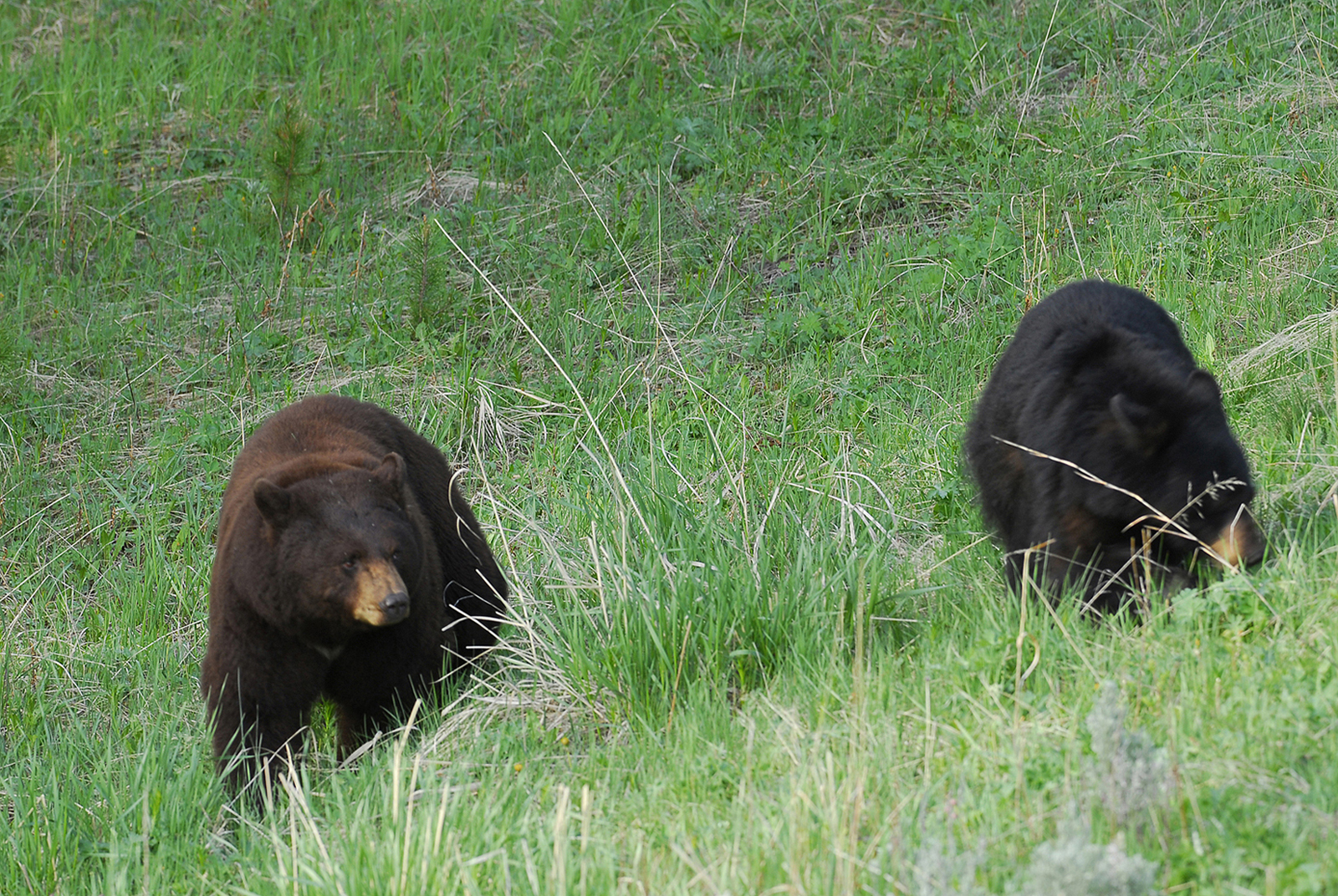
Salt Lake City -- By all indications, black bears in Utah are doing well. And that means hunters will have a few more chances to hunt bears in 2011.

On Jan. 4, the Utah Wildlife Board approved several bear hunting changes for Utah’s 2011 seasons. All of the changes the board approved will be available in the 2011 Utah Black Bear Guidebook. The free guidebook should be available at www.wildlife.utah.gov/guidebooks  during the week of Jan. 31.

The following are some of the changes the board approved:

A total of 419 hunting permits. That’s 53 more than the 366 offered in 2010. About 40 percent of those who draw a bear-hunting permit end up taking a bear. The extra 53 permits should result in hunters taking about 180 bears in 2011. In 2010, hunters took 158 bears. Forty one of the 419 permits are premium-limited-entry permits.

If they don’t take a bear during the spring hunt, those who draw one of the 41 premium-limited-entry permits can hunt bears again during the fall hunt. The spring hunting season has been extended for one week on four additional bear hunting units in Utah. The South Slope, Yellowstone unit and the South Slope, Vernal, Diamond Mountain, Bonanza unit in northeastern Utah, and the Central Mountains, Manti-North unit in central Utah, are the three units where the spring season was extended at the request of biologists from the Division of Wildlife Resources.

The Wildlife Board also approved a request from the Southern Region Advisory Council to extend the season one week on the Boulder unit in southern Utah.

Adding the four units brings to 10 the total number of bear hunting units in Utah that have a spring hunting season that runs one week longer than the other units in the state.

The extended season starts April 9 and runs until June 5. Those who draw a fall spot-and-stalk permit for the Book Cliffs, Little Creek unit can hunt from August through November.

2010 was the first year a spot-and-stalk bear hunt was held on the unit. To avoid conflicts with big game hunters, bear hunters were not allowed to hunt on the unit in October. But very few deer hunters are allowed to hunt the unit, and the DWR is not aware of any conflicts that occurred between deer and bear hunters. For that reason, DWR biologists recommended that spot-and-stalk bear hunters be allowed to hunt on the unit in October too.

(Spot-and-stalk hunters may not use hounds to track and tree bears, and they may not use bait to try to lure bears in.)

The Book Cliffs, Little Creek unit is in the roadless area in the Book Cliffs.

For more information, call the nearest Division of Wildlife Resources office or the DWR’s Salt Lake City office at (801) 538-4700.

Trapping Law Won’t Change

photo by Lynn Chamberlain, Utah Division of Wildlife Resources


Salt Lake City -- The amount of time between when a trapper sets a non-lethal trap, and when he has to check it again, won’t change in Utah.

On Jan. 4, the Utah Wildlife Board voted 4-2 to keep a requirement that trappers must check their non-lethal foothold traps within 48 hours of setting them.

The Division of Wildlife Resources opposed lengthening the time past 48 hours. And four of Utah’s five Regional Advisory Councils also voted against lengthening the time.

Plan will guide bear management until 2023

A plan that will guide how black bears are managed in Utah for the next 12 years was approved on Jan. 4 by the Utah Wildlife Board.

The plan is available at http://go.usa.gov/rkf . After clicking on http://go.usa.gov/rkf , scroll down to the “Black bear management plan” subhead to find a link to the plan.

The following are among the plan’s highlights:

Currently, most bear hunters in Utah use hounds to track and tree bears. A few use archery equipment and hunt over bait. But starting in 2012, some areas of the state will become spot-and-stalk-only areas.

Hunters may not use hounds or bait during spot-and-stalk hunts.

Utah will have its first harvest-objective bear hunting areas starting in 2012. Having harvest-objective areas will allow biologists to focus more hunters on bears that are killing livestock and raiding campgrounds.

Currently, all of Utah’s bear hunting areas are limited-entry areas. Only those who draw a permit for a limited-entry area can hunt on it.

Under the new plan, some of the limited-entry areas will become harvest-objective areas. The number of hunters who can hunt on a harvest-objective area isn’t limited, so switching an area to harvest objective will increase the number of people who can hunt the area. Letting more hunters hunt an area increases the chance that a set number of bears are taken.

As soon as the set number of bears is taken (called the area’s quota), the hunt on the area will end for the season.

Archery hunters can still use bait. Using bait allows archery hunters to lure bears in close enough so they can make a clean and effective shot.

Currently, three factors are used to determine the health of Utah’s bear population—the percentage of females taken by hunters, the average age of the bears taken and the number of adult bears that survive from year to year.

You won’t find these three factors in the new plan. In their place, the key factors are:

The number of females and the number of adult males that hunters take. (An adult male bear is a bear that’s five years of age or older.)

Justin Dolling, game mammals coordinator for the Division of Wildlife Resources, says the number of females and adult males that hunters take gives important information about how a bear population is doing. “The number of females is important because females give birth to and care for the cubs,” Dolling says. “But the number of adult males hunters take is the best early indicator we have about the health of a bear population.”

Dolling says hunters usually find adult males because adult males wander more than the other age groups. “You know a bear population is in decline if the number of adult males hunters take is going down and the number of females is going up,” he says.

Results from two important bear studies will also be used to determine the health of Utah’s bear population.

One study involves snagging hair from bears at sites across Utah and then using DNA tests to determine how often bears are visiting the research sites. This study is helping biologists determine the total number of bears in Utah. It’s also helping them measure the growth rate of the state’s bear population.

The second study involves visiting bear dens in the winter to see how many cubs are in the dens and to assess the health of the cubs and their mothers. This study is giving biologists important information about the number of bears that are coming into Utah’s population each year.

A 10-member group called the Utah Black Bear Advisory Committee compiled the new plan. The committee’s members are listed at the start of the plan.

Saturday, December 4, 2010

Utah Split into Smaller Deer Hunting Areas for 2012


Salt Lake City -- In 2011, Utah’s general buck deer hunt will run very much like it did in 2010. There is one big change, though -- the rifle buck deer hunt will run for nine days.

While the changes for 2011 are relatively small, the changes for 2012 are huge.

Starting in 2012, general deer hunting will happen within smaller hunting areas called units. Currently, the general hunt happens within five larger regions.

Members of the Utah Wildlife Board approved the 2012 deer hunting changes by a 4-2 vote at their meeting on Dec. 2.

You can listen to an audio recording of the meeting at www.wildlife.utah.gov/dwr/board-minutes.html . The recording should be available by Dec. 3.

The changes the board approved for the 2011 season can be found in Utah’s 2011 big game application book. The free book should be available at http://www.wildlife.utah.gov/  by the end of December.

A copy of the rules hunters must follow while they’re in the field will be available in summer 2011.

2011 hunt
A nine-day rifle hunt for all hunters, regardless of their age, was the biggest change the board approved for Utah’s 2011 general buck deer hunt.

In 2010, those over 18 years of age were allowed to hunt only five days  on most of Utah’s deer hunting areas.

The board reduced the length of the 2010 rifle hunt to try to reduce the number of bucks hunters took. Anis Aoude, big game coordinator for the Division of Wildlife Resources, thinks hunters will be happy that the rifle hunt has been lengthened to nine days.

“I appreciate what the board was trying to do,” Aoude says, “but, unfortunately, reducing the length of a hunt isn’t the best way to save bucks.”

Aoude says reducing the length of a hunt forces hunters to make the most of the days they do have. ”And they’re more likely to take the first buck they see,” he says.

While the rifle hunt will run for nine days across most of Utah, four small areas in the state will have a slightly shorter season in 2011.  The rifle hunt on the following units -- Oquirrh-Stansbury, South Slope (Vernal), Monroe, and Plateau, Boulder/Kairparowits -- will run for five days.


2012 hunt
The major deer hunting change the board approved happens in 2012.

That’s when Utah’s five deer hunting regions will be eliminated.  Once the regions are eliminated, the state will be split into smaller hunting areas.

The number of bucks biologists manage for will also change.

Currently, biologists manage the state’s deer herds with a goal of finding an average of at least 15 bucks per 100 does across five regions after the hunting season is over in the fall.

Starting in 2012, biologists will manage smaller units with a goal offinding at least 18 bucks per 100 does on each unit after the hunt is over. (The total number of hunting units will be determined sometime next year.)

Aoude says decreasing the number of hunters in the field is the most effective way to increase the number of bucks per 100 does.

DWR biologists will have to determine how many hunting permits will have to be cut so they find at least 18 bucks per 100 does on each unit after the hunting season is over in the fall. Aoude’s current estimate is about 13,000.

Since fewer permits will be offered, the price for a general deer hunting permit may go up. But Aoude isn’t sure yet exactly what the price will be.

The following will also change in 2012:-- General-season archery hunters will no longer be allowed to hunt across Utah. Instead, they’ll have to hunt on the unit they obtained a permit for.

The board approved the archery hunting change by a 4-3 vote.

--There’s a good chance the state’s Dedicated Hunter program will change in 2012. Exactly what the program will look like in 2012 still needs to be determined, however.

For more information, call the nearest Division of Wildlife Resources office or the DWR’s Salt Lake City office at (801) 538-4700.

Monday, November 29, 2010

More Chances to Hunt Bears


DWR presents ideas for 2011 hunts
By all indications, black bears in Utah are doing well. And that means hunters might have a few more chances to hunt bears in 2011.

The following are among the changes Division of Wildlife Resources biologists are recommending for Utah’s 2011 bear hunts:

 A total of 419 hunting permits. That’s 53 more than the 366 offered in 2010. About 40 percent of those who draw a bear-hunting permit end up taking a bear. The extra 53 permits should result in hunters taking about 180 bears in 2011. In 2010, hunters took 158 bears.

 Forty one of the 419 permits would be premium-limited-entry permits. If they didn’t take a bear during the spring hunt, those who drew one of the 41 premium-limited-entry permits could hunt bears again during the fall hunt.

 Extending the spring hunting season for one week on three additional bear management units in the state.
The South Slope, Yellowstone unit and the South Slope, Vernal, Diamond Mountain, Bonanza unit in northeastern Utah, and the Central Mountains, Manti-North unit in central Utah, are the three units biologists are considering.

Currently, six units in Utah have a hunting season that’s one week longer than the rest of the units in the state. The extended season usually runs from early April through the first week in June.

 Allowing those who draw a fall spot-and-stalk permit for the Book Cliffs, Little Creek unit to hunt from August through November. 2010 was the first year a spot-and-stalk bear hunt was held on the unit. To avoid conflicts with big game hunters, bear hunters were not allowed to hunt on the unit in October. But very few deer hunters are allowed to hunt the unit, and the DWR is not aware of any conflicts that occurred between deer and bear hunters. For that reason, DWR biologists would like to give spot-and-stalk bear hunters a chance to hunt on the unit in October too.

(Spot-and-stalk hunters may not use hounds to track and tree bears, and they may not use bait to try to lure bears in.) The Book Cliffs, Little Creek unit is in the roadless area in the BookCliffs.


Bears are doing well
Three main factors help DWR biologists decide how many hunting permits they should recommend each year. Those factors include the average age of the bears hunters take, the percent of those bears that are females and the number of adult bears that are surviving from year to year.

Justin Dolling, game mammals coordinator for the DWR, says as long as targets relating to those factors aren’t exceeded, biologists know the state’s black bear population is doing well. “And those targets haven’t been exceeded for several years,” he says.

You can see all of the DWR’s black bear recommendations at www.wildlife.utah.gov/pub After you’ve reviewed the recommendations at www.wildlife.utah.gov/public_meetings , you can let your Regional Advisory Council members know your thoughts by attending your upcoming RAC meeting or by sending an e-mail to them.

A plan that will guide how black bears are managed in Utah for the next 12 years is also available for review.

You can read the proposed plan at www.wildlife.utah.gov/public_meetings . The following are among the plan’s highlights:
 Currently, most bear hunters in Utah use hounds to track and tree bears.  While hunting with hounds would continue under the new plan, some areas of the state may become spot-and-stalk-only areas. Hounds may not be used during spot-and-stalk hunts.

 To help biologists focus hunters on bears that are killing livestock and raiding campgrounds, the new plan would create harvest-objective areas.

Currently, all of Utah’s bear hunting areas are limited-entry areas.  Only those who draw a permit for a limited-entry area can hunt on it. Under the new plan, some of the limited-entry areas would become harvest-objective areas. The number of hunters who can hunt on a harvest-objective area isn’t limited, so switching an area to harvest objective would increase the number of people who can hunt the area.  Letting more hunters hunt an area would increase the chance that a set number of bears were taken.

As soon as the set number of bears was taken (called the area’s quota), the hunt on the area would end for the season.
 Bait could still be used by archery hunters to lure bears in close enough for a clean and effective shot.

 Currently, three factors are used to determine the health of Utah’s bear population -- the percentage of females taken by hunters, the average age of the bears taken and the number of adult bears that survive from year to year.

The new plan would eliminate these three factors. In their place, the key factors would be:
• The number of females and the number of adult males that hunters take. (An adult male bear is a bear that’s five years of age or older.) Justin Dolling, game mammals coordinator for the Division of Wildlife Resources, says the number of females and adult males that hunters take gives important information about how a bear population is doing.

“The number of females is important because females give birth to and care for the cubs,” Dolling says. “But the number of adult males hunters take is the best early indicator we have about the health of a bear population.”

Dolling says hunters usually find adult males because adult males wander more than the other age groups. “You know a bear population is in decline if the number of adult males hunters take is going down and the number of females is going up,” he says.

• Results from two important bear studies would also be used in the new management system.

One study involves snagging hair from bears at sites across Utah and then using DNA tests to determine how often bears are visiting the research sites. This study is helping biologists determine the total number of bears in Utah and helping them measure the growth rate of the state’s population.

The second study involves visiting bear dens in the winter to see how many cubs are in the dens and to assess the health of the cubs and their mothers. This study is giving biologists important information about the number of bears that are being brought into Utah’s population each year.

RAC chairmen will share the input they receive with members of the Utah Wildlife Board. The board will meet in Salt Lake City on Jan. 4 to approve bear hunting and pursuit rules for Utah’s 2011 seasons.
Dates, times and locations for the RAC meetings are as follows:

Southern Region
Dec. 7
7 p.m.
Beaver High School
195 E. Center St.
Beaver


Southeastern Region
Dec. 8
6:30 p.m.
John Wesley Powell Museum
1765 E. Main St.
Green River


Northeastern Region
Dec. 9
6:30 p.m.
Bingham Entrepreneurship and Energy Research Center
320 N. Aggie Blvd. (2000 W.)
Vernal


Central Region
Dec. 14
6:30 p.m.
Central Region Conference Center
1115 N. Main St.
Springville

Northern Region
Dec. 15
6 p.m.
Brigham City Community Center
24 N. 300 W.
Brigham City


E-mail
You can also provide your comments to your RAC via e-mail. E-mail addresses for your RAC members are available at www.wildlife.utah.gov/public_meetings .

The group each RAC member represents (sportsman, non-consumptive, etc.) is listed under each person’s e-mail address. You should direct your e-mail to the people on the RAC who represent your interest.

Wildlife Board will make final deer hunting decision on Dec. 2


Salt Lake City -- After a series of public meetings, the state’s Regional Advisory Councils are split over which deer hunting option they prefer.

The Utah Wildlife Board will make the final decision when it meets in Salt Lake City on Dec. 2. Right now, the board is considering three options.

The Dec. 2 meeting is open to the public. You’re invited and encouraged to attend.

Dec. 2 meeting
The Dec. 2 meeting begins at 9 a.m. at the Department of Natural Resources, 1594 W. North Temple in Salt Lake City.

The following items are available to help you understand the issues and prepare for the meeting:

 The three options the board is considering are available at www.wildlife.utah.gov/dwr/2011-deer-changes.html .

 Written minutes and audio recordings of the recent RAC meetings are available at www.wildlife.utah.gov/dwr/rac-minutes.html .

 Jim Karpowitz, director of the Division of Wildlife Resources, has written a letter to Utah’s deer hunters. His letter explains the current status of mule deer in Utah and what the future holds for these animals. You can read the letter at
www.wildlife.utah.gov/dwr/2011-deer-changes/director-message.html .

At the bottom of Karpowitz’s letter, you'll find links to several mule deer-related items on the DWR’s website.

Dec. 1
On Dec. 1, the Wildlife Board will meet in an executive work meeting to prepare for the Dec. 2 meeting. You’re invited to attend the Dec. 1 meeting too. But public comment will NOT be accepted at the Dec. 1 meeting. The Dec. 1 meeting begins at 1 p.m. in the auditorium at the Department of Natural Resources.

For more information about the two meetings, call the DWR’s Salt Lake City office at (801) 538-4700.

Tuesday, October 19, 2010

New Deer Management Program in Bountiful


Bountiful -- A program is now in place to manage deer in the city of Bountiful.

The city and the Division of Wildlife Resources joined together to develop the program. The program includes the following:

A website will be developed to educate Bountiful residents about things they can do to keep deer from damaging their property. The website will also explain why people should not feed deer.

A list of property owners who have expressed a willingness to allow their property to be used to access deer within the city limits will also be developed.

A pilot program will be developed to evaluate the effectiveness of managing the deer population by selectively thinning some of the deer on public property in the city. Deer would also be thinned on private property where the property owner has given permission for deer to be thinned.

In addition to getting information from the city’s website, the following Web pages provide information about mule deer and how to keep the animals from damaging your yard or garden:
http://go.usa.gov/ajE
http://go.usa.gov/ajm

Goal of the program
“The goal of the program is to effectively manage the wildlife population within the corporate limits of the city of Bountiful,” says Bountiful Mayor Joe Johnson. “What we are trying to do is develop a program where we tolerate a certain number of deer within the city limits, but manage that number so that they do not become a health, public safety or nuisance threat to our residents.”

Johnson was quick to point out that the goal of the program is not to eliminate the deer population within the city limits.

“We have always had deer within the city limits,” Johnson says, “and from time to time the deer population has been thinned. This thinning is simply an extension of an existing policy that has been utilized when the need has arisen.”

Bountiful is working with the DWR to share the costs of the program. DWR biologists and city managers will evaluate the program several months after it’s implemented. Additionally, the city will work with the DWR to develop educational materials the city can disseminate through its website and through the city’s newsletter.

“This program attempts to balance the desires of those who enjoy the deer as part of the experience of living in Bountiful,” says City Manager Tom Hardy, “and those who wish to use their property for raising gardens, flowers, shrubs and other plants in the ‘City of Beautiful Homes and Gardens.’”


Giving meat to those in need
The Utah Chapter of Farmers and Hunters Feeding the Hungry is accepting donations from those who would like to help pay so meat from culled animals can be processed and prepared. This meat will be given at the Bountiful Food Pantry to those in need of food.

If you’d like to donate, contact Kelly Bingham at (801) 726-2598 or via e-mail at kmbingham92@msn.com .


Using the program in other cities?
The Division of Wildlife Resources is the state agency responsible for managing wildlife populations within Utah, including the state’s deer population. The city of Bountiful wants to take advantage of the DWR’s experience, professionalism and sensitivity to the urban deer population in Bountiful by working directly with the DWR on this issue.

It’s possible that the DWR could take the program it’s developed with Bountiful and replicate it in other cities that are facing the same issue.

Thursday, October 7, 2010

Tips to Get Prepared for This Year’s Rifle Buck Deer Hunt

Photo courtesy of Dustin Stettler

If you’re one of the lucky hunters who obtained a permit for the hunt, getting prepared now—by gathering materials and gaining knowledge—are the key to a safe and successful hunt. And while taking a deer is usually the highlight of any deer hunt, make sure you take advantage of all the experiences deer hunting offers. Utah’s most popular hunt—the general rifle buck deer hunt—begins Oct. 23.

“Don’t be so focused on taking a deer that you miss out on everything deer hunting has to offer,” says Gary Cook, hunter education coordinator for the Division of Wildlife Resources. “Camping with your family and friends and enjoying Utah’s wildlife and the beautiful state we live in are all things you can enjoy during your time afield.”

Cook provides the following tips for an enjoyable and safe hunt:

Personal preparation:
* be familiar with the area you’re going to hunt. If possible, scout the area before the hunt. “Knowing the area and the habits and patterns of the deer that live in the area is vital for success,” Cook says.

* put a survival kit together. The kit should include:

1) a small first aid kit;

2) three ways to make a fire (e.g. matches, a cigarette lighter, fire starters);

3) quick-energy snack foods;

4) a cord or rope;

5) a compass;

6) a flashlight;

7) an extra knife and;

8) a small pad of paper and a pencil (so if you become lost, you can leave information at your last location about yourself and the direction you’re traveling).


Preparing your firearm:
* be as familiar as possible with your firearm—know how to load and unload it, and where the safety is and how to operate it.

* make sure the barrel of your firearm doesn’t have any obstructions in it.

* make sure you have the correct ammunition for your firearm.

* sight-in your firearm before the hunt.


Firearm safety:
* controlling your firearm’s muzzle is the most important part of firearm safety. Never let the muzzle of your firearm point at anything you do not intend to shoot. That includes not pointing the muzzle at yourself.

* never carry a loaded firearm in your vehicle.

* don’t put your finger on the trigger until your firearm’s sights are on the target.

* before shooting, make sure of your target and what’s beyond it.


Vehicle preparation:
* make sure your vehicle is in good mechanical condition.

* make sure you have a shovel, an ax, tire chains, jumper cables and a tow chain in your vehicle.

* if you experience mechanical problems with your vehicle or become snowed in, stay with your vehicle—don’t leave it.


Before leaving on your trip:
* let someone know where you’re going and when you expect to return.


While in the field:
* never hunt alone.

* wear proper safety clothing: 400 square inches of hunter orange on your back, chest and head.


Field dressing your animal:
* use a sharp knife. A sharp knife does a better job of cutting than a dull knife does and is safer to use.

* cut away from you—never bring a knife blade towards you while cutting.


Your physical well-being:
* know your physical limitations, and don’t exceed them.

* prepare yourself for weather changes by dressing in layers. Dressing in layers allows you to regulate your body temperature by adding or removing clothes as needed.

* drink plenty of water, no matter how cold it is. “You can become dehydrated, even in cold weather,” Cook says.

* hypothermia (the loss of body temperature) can occur in temperatures as warm as 50 degrees.

Be aware of the signs of hypothermia. Some of the first signs are violent shivering, stumbling or becoming disoriented. “When you notice these signs, sit down immediately and build a fire,” Cook says. “Get yourself warm and dry.”

* frostbite. If you’re hunting in cold weather, watch for signs that you’re getting frostbite. White spots on your skin are the first sign. Check your face, feet and hands regularly. You’ll notice the first signs of frostbite on your face sooner if you’re hunting with a companion who can alert you.


If you get lost:
* don’t panic. Sit down and build a fire, even if it isn’t cold. “A fire is soothing. Building a fire will help you relax and think clearly,” Cook says.

After calming down, try to get your bearings and think your way out of the situation. If you think you know which direction you need to travel, get the pad of paper and pencil out of your survival kit and leave a note at your location. Indicate on the note who you are and the direction you’re traveling. If you find other hunters, don’t be embarrassed to ask them for directions and help.

If you don’t know which direction you should travel, stay at your camp and build a shelter several hours before sundown, if possible. Build a smoky fire (this type of fire can be spotted from the air) or build three fires (a distress signal that can also be spotted from the air).

Remaining at your camp is usually a good option. “If you have to, you can live without food and water for several days,” Cook says.

Alcohol and firearms don’t mix!
* do not handle a firearm if you’ve been drinking alcohol.

* do not give alcohol to someone who’s cold. Instead of warming the person, alcohol will actually make them colder.

Monday, June 21, 2010

Major Deer and Elk Hunting Changes


If you enjoy hunting deer or elk in Utah, you need to take note—ideas are being floated that could dramatically change when the hunts are held in 2011.

You can learn about the possible changes—and let the Division of Wildlife Resources know what you think about its ideas—by logging onto a new Web page.

The page is available at the DWR’s website. The address is www.go.usa.gov/3v4 .

When you arrive at the page, you’ll find information about the proposed changes. You’ll also find a brief questionnaire. Answering the questionnaire will allow biologists to know what you think about the ideas.

“If you enjoy hunting deer and elk in Utah, you need to visit the site and let us know what you think,” says Anis Aoude, big game coordinator for the DWR.

Aoude also encourages you to share your ideas with members of the Utah Wildlife Board and the state’s Regional Advisory Councils. E-mail addresses for the board and RAC members are available at www.wildlife.utah.gov/public_meetings .

“The board will decide which ideas to approve when it meets Dec. 2,” Aoude says. “Even though their meeting is a few months away, right now is the time to let the board and RACs know what you think.”

Thursday, May 27, 2010

Apply for Antlerless Big Game Permits June 1


You can help Utah’s big game animals and have a fun time in the outdoors this fall if you obtain a permit to hunt animals that don’t have antlers.

Having hunters take female big game animals is an important management tool. It allows biologists to balance big game animals with the habitat that’s available to the animals.

“Antlerless hunters usually have a higher success rate than those hunting for animals with antlers,” says Anis Aoude, big game coordinator for the Division of Wildlife Resources.

“Antlerless hunts are great,” Aoude says. “They provide a chance to get out and enjoy nature, they’re usually less crowded than other big game hunts and they provide a good chance to take an animal.”


Apply for a permit
Most of Utah’s antlerless big game hunting permits are taken in the state’s antlerless draw. You can apply for a permit starting June 1 at http://www.wildlife.utah.gov/  or by calling the nearest DWR office.

To get your application in the draw for permits, you must submit it through the Web site no later than 11 p.m. on June 17. Applications will be accepted over the phone until 6 p.m. on June 17.

The following are the number of permits available this year:
Species                  Number of permits
Cow Elk                 9,838
Doe Deer               1,975
Doe Pronghorn      622
Cow Moose           19

In addition to hunts on public land, many of Utah’s private Cooperative Wildlife Management Units offer antlerless permits to Utah residents. Applications for CWMU permits will also be accepted from June 1 through June 17.

For more information, call Utah Wildlife Administrative Services at 1-800-221-0659, the nearest Division of Wildlife Resources office or the DWR’s Salt Lake City office at (801) 538-4700.

White bass illegally planted in Deer Creek Reservoir

Photo courtesy by Don Wiley, Utah Division of Wildlife Resources.

Heber City -- Biologists have found white bass in the Provo River above Deer Creek Reservoir.

The adult white bass—12 inches in length—moved from the reservoir and into the river to spawn. Biologists say there’s only one way the bass could have ended up in the reservoir—someone with a bucketful of bass put them there.

After they confirmed the find, biologists and conservation officers with the Division of Wildlife Resources were frustrated and angry. And the feelings they have are spreading among rainbow trout anglers in north-central Utah. Deer Creek Reservoir currently provides excellent rainbow trout fishing. But dumping bass into the reservoir could change that in years to come.

The DWR, the Stonefly Society of the Wasatch and Utah Trout Unlimited are offering a reward of up to $7,000 to the person who provides information that leads to the arrest and conviction of the person or persons who put the bass in the reservoir.

If you have information, please call Utah’s Turn-in-a-Poacher hotline at 1-800-662-DEER (3337).


Rainbow trout and white bass
“When we stock trout in Deer Creek, the fish are 10 inches long. By the following spring, many of them are 16 to 17 inches long,” says Roger Wilson, cold water sport fisheries coordinator for the DWR. “Deer Creek is a very productive trout water.”

But Wilson says a bucketful of white bass could change all that. “Rainbows and young white bass eat mostly zooplankton,” he says. “For the next year or two, there should be enough zooplankton for both of the fish. But white bass reproduce quickly, so it won’t take long for the white bass population to expand. Once that happens, there won’t be enough zooplankton to go around.”

And without enough zooplankton, the growth rate of the trout could slow to almost nothing.

Wilson says DWR biologists are conducting fish population surveys at Deer Creek this month. Once they’ve completed their surveys, they’ll have a better picture of just how large the white bass population has become. “Once we know that, we’ll look at options to try and control them,” he says.

Wilson says treating the reservoir with chemicals; fluctuating the water level during the white bass spawning season; blocking the tributary streams to prevent the white bass from moving into them to spawn; swamping the reservoir with sterile or hybrid white bass; and netting and removing as many white bass as possible are among the options biologists might use to deal with the bass.

“But all of these options are fraught with problems,” Wilson says. “And none of them may be totally effective at removing the bass.”

Located less than an hour’s drive from Provo and Salt Lake City, Deer Creek is one of Utah’s most popular trout fishing waters.


Everyone loses
“Our biologists are trying to provide anglers with a variety of fish to catch,” says Walt Donaldson, fisheries chief for the DWR. “They do that by determining which fish will do the best in specific waters and then placing fish in those waters that won’t compete directly for food, space and cover.

“It will be discouraging if a single act undoes all of the hard work that’s happened to create a fishery like the one at Deer Creek.”

If you’re an angler, Donaldson says you have plenty of reasons to be upset when someone moves fish illegally. “Not only can it ruin fishing at your favorite water, it also forces us to divert funds from projects we were going to do to improve fisheries in the state to dealing with the problem instead.”

Donaldson says local communities lose too. “Communities in some parts of the state receive a lot of revenue from anglers who fish waters in their area. If anglers stop fishing those waters, the people in those communities will lose too.”


Fines, jail time
Illegally moving fish from one body of water to another is a class A misdemeanor in Utah. You can receive a fine of up to $2,500 and spend up to one year in jail. You can also be held financially liable for any damage you do to the fishery.

For more information, call the DWR’s Central Region office at (801) 491-5678.

Monday, May 10, 2010

DWR to conduct Administrative Checkpoints

PRICE, UTAH—The Division of Wildlife Resources (DWR) is planning to conduct a number of administrative checkpoints in Utah this spring and summer. Checkpoints provide a means to contact a lot of people along the state’s transportation arteries. Anglers can expect to encounter one or more of these checkpoints as they fish.

Checkpoints provide the DWR with the opportunity to monitor compliance with fishing regulations. Information on harvest success, species composition and size of fish can also be collected. Where necessary, conservation officers can address violations of law, and take the opportunity to educate the sporting public about the regulations.

Checkpoint locations are selected near popular fishing destinations to avoid slowing non-fishing traffic. It is the responsibility of the DWR to protect and conserve the state’s fish and wildlife. By curbing angler disregard for fishing regulations, the DWR is able to better manage its fisheries and provide a better fishing experience for the general public.

Wednesday, April 14, 2010

DWR shares ideas for this fall’s Antlerless Big Game Hunts


If they have a cow elk permit for the same area, all bull elk hunters—including rifle hunters—might be allowed to take a cow elk during this fall’s bull elk hunt.

That change—and permit numbers for Utah’s 2010 antlerless big game hunts—are among items Division of Wildlife Resources biologists want your input about.

Learn more, share your ideas
You can read the DWR’s proposals on the Web at www.wildlife.utah.gov/public_meetings/next.php . Once you’ve read the proposals, you can provide your comments one of two ways:

RAC meetings
Five Regional Advisory Council meetings will be held across Utah on April 27. Citizens representing the RACs will take the input received to the Utah Wildlife Board. Board members will use your input to set permit numbers for this fall’s hunts.

The April 27 meetings begin at 6:30 p.m. You can participate and provide your input at any of the following locations:

Northern Region
Brigham City Community Center
24 N. 300 W.
Brigham City

Central Region
Springville Junior High School
165 S. 700 E.
Springville

Northeastern Region
Uintah Basin Applied Technology
450 N. 2000 W.
Vernal

Southeastern Region
John Wesley Powell Museum
1765 E. Main St.
Green River

Southern Region
Cedar Middle School
2215 W. Royal Hunte Dr.
Cedar City

E-mail
You can also provide your comments to your RAC via e-mail. E-mail addresses for your RAC members are available at www.wildlife.utah.gov/public_meetings/rac_members.php .

The group each RAC member represents (sportsman, non-consumptive, etc.) is listed under each person’s e-mail address. You should direct your e-mail to the people on the RAC who represent your interest.

Permit numbers
The following are the number of antlerless hunting permits available in 2009 and the number DWR biologists are recommending for this fall:

                              2009           2010
Cow elk                  11,146      9,813
Doe deer                 1,775       2,025
Doe pronghorn        1,107      622
Cow moose            30           19

Taking cow elk during the bull elk hunts
Allowing hunters to take a cow elk during the bull elk hunts is among the strategies DWR biologists have used to keep elk herds within population objectives outlined in Utah’s elk unit management plans.

If they have a cow elk permit for the same unit on which they’re hunting bulls, archery and muzzleloader elk hunters are allowed to take a cow elk during the bull elk hunts.

Biologists want to give rifle bull elk hunters the same chance.

“There are two advantages to allowing hunters to take a cow elk during the bull elk rifle hunts,” says Anis Aoude, big game coordinator for the DWR.

“First of all, doing so would help ensure enough cow elk are taken,” he says. “Rifle hunters have the highest success rate.

“Also, allowing hunters to take a cow elk during the bull elk rifle hunts would reduce the number of hunters who hunt during the cow elk-only hunts later in the year,” he says. “That would reduce hunter crowding and reduce pressure on the elk while they’re on their winter ranges.”

Deer and Crops
Almost 90 percent of the doe deer permits the biologists are recommending would be used to control deer in areas where deer are damaging crops on farm land.

The remaining 12 percent of the permits—250 of the 2,025 permits biologists are recommending—would be used to keep deer herds on the Paunsaugunt and Panguitch Lake limited-entry units from growing beyond the number their habitat can support.

“The deer herds on these two units are at their population objective,” Aoude says. “We need to make sure we balance the number of deer with the habitat that’s available to them.”

Pronghorn on the Parker Mountains
In 2009, the Utah Wildlife Board approved 1,107 doe pronghorn permits. Most of those permits were used to reduce the number of pronghorn on the Parker Mountains in southwestern Utah. (The population objective for the unit is 1,500 pronghorn.)

“The unit is getting closer to its population objective,” Aoude says. “Because it’s getting closer to the objective, we can start reducing the number of doe pronghorn permits offered for it.”

Moose: Nearing their objective
Aoude says the number of moose in northern Utah is approaching the population objective. Biologists are recommending a slight decrease in the number of cow moose permits available this year.

For more information, call the nearest Division of Wildlife Resources office or the DWR’s Salt Lake City office at (801) 538-4700.

Monday, April 12, 2010

Melting Ice Means Great Shore Fishing in Utah

Mike Hadley, DWR regional aquatics biologist, holds a large male rainbow trout—in full spawning colors—caught during a gillnetting survey at Minersville Reservoir on March 30, 2010. Minersville Reservoir is west of Beaver.
Photo courtesy of Utah Division of Wildlife Resources

The calendar says spring arrived three weeks ago. But anglers in southern Utah know different.

They know spring is “really” here when the ice starts to come off the surface of southern Utah’s fishing waters. When that happens, they know hungry trout will be cruising the shorelines of lakes and reservoirs in the area, looking for their first meal of the spring. They know some of the best fishing of the year is here!

Try these waters
Mike Ottenbacher, regional aquatic manager for the Division of Wildlife Resources, says the ice has melted off several reservoirs in southern Utah. And it will be melting soon at many others.

If you want to get in on the action, Ottenbacher suggests trying the following waters:

Otter Creek State Park: Otter Creek Reservoir will likely be ice-fee by the time you read this, and some nice rainbows will be cruising its shoreline. A good water year in the Sevier River Basin has filled the reservoir almost to capacity, That means conditions will be good for fish this year. The trout will grow fast through the summer. If the wind is blowing on the reservoir, try fishing the stream immediately below the reservoir. Or you can go farther downstream and fish the portion of the stream that flows through the Kingston Canyon Wildlife Management Area.

Minersville Reservoir: The ice is gone and the trout are back! Minersville Reservoir has suffered through some tough times in recent years. Poor water quality (probably related to some fires in 2007) and low water caused most of the trout in the reservoir to die during the winter of 2008 - 2009. The trout the DWR stocked in 2009, however, have survived and have grown well. Sampling at the end of March 2010 showed good numbers of 14- to 18-inch trout. A few older fish—more than 20 inches long—were also found during the sampling. An added bonus is a growing population of smallmouth bass. Good numbers of chunky bass should be available later this summer when the water warms up and the bass become active.

Newcastle Reservoir: The ice is off this reservoir west of Cedar City. You can catch a variety of fish here, including rainbow trout, smallmouth bass and wipers. Try for the trout now, and then go for the smallmouth and wipers after the water warms up a bit.

Enterprise reservoirs: Two reservoirs located west of Cedar City. The upper reservoir is back in production after several years of low water because of work on its dam. The ice is gone, and the water level is coming up at both reservoirs. Both contain rainbow trout; the lower reservoir was stocked with catchable-sized rainbows in late March.

Quail Creek State Park and Sand Hollow State Park: These two reservoirs down in Dixie—Quail Creek and Sand Hollow—stay ice-free through the winter. Both contain largemouth bass and bluegill. Quail Creek Reservoir also has some rainbow trout. The bass and bluegill fishing picks up in mid-April and early May when the water nears 60 degrees.

Lake Powell: Lake Powell is a perennial spring favorite. There isn’t any water in Utah—or the rest of the West—that compares to it. Look for fishing to improve around “spring break” time and to keep getting better. The rising water level is flooding the vegetation that has grown at the lake in recent years. And that means better habitat for the fish and great fishing in 2010.

Future” spring fishing spots: Heavy snowpack and cold spring weather in southern Utah means ice-off will be a little later than normal at many waters this year. Some spots to try as they open up later this spring include Fish Lake, Panguitch Lake, and lakes on the Beaver Mountain and Boulder Mountain. The large amount of snow received in southern Utah this past winter should result in full reservoirs and lakes. And that means great fishing through the summer.

Ice-off and spring fishing tips
The neat thing about fishing at ice-off and during early spring is that about any technique or type of gear you use will work. And you don’t need a boat to be successful. In fact, in the spring, fishing from the shore is often better than fishing from a boat. Gravel shorelines and rocky points near shore attract large rainbow trout that are cruising the shorelines looking for a place to spawn.

For the latest tips on the best techniques to use and “hot” lures, flies and baits to try, check out the latest fishing reports at www.wildlife.utah.gov/fishing/reports.php .

Wednesday, April 7, 2010

Great Early Spring Stream Fishing Predicted

Photo by Phil Douglass, Utah Division of Wildlife Resources


If you enjoy catching trout in rivers and streams in northern Utah, you won’t have to wait long to catch some this year.

Depending on how spring temperatures warm up, runoff this spring could be lower than normal. And that means some of the best fishing of the year on rivers and streams may kick off early.

“We will have some runoff this spring, but it won’t peak as high or last as long as it normally does,” says Roger Wilson, cold water sport fisheries coordinator for the Division of Wildlife Resources. “If you like to fish rivers and streams, get your fishing poles ready. We should see some great early-season fishing.”

Not many challenges this spring
Wilson says river and stream anglers in northern Utah won’t face some of the challenges they usually face this time of the year.

“Because the water won’t be as high or as cold this spring, the trout should feed more actively,” Wilson says. He says the water won’t be as turbid either. “The clearer water will make it easier for trout to see your bait, lure or fly.”

And your offering won’t be competing with as much natural food for the attention of the fish. “The limited runoff won’t sweep a lot of natural food down with it because it’s not going to last as long this year,” he says. “Whatever you cast in or onto the water is going to stand out to the trout.”

The lower runoff will also affect when insect hatches occur. “It’s important that fly anglers watch the hatches closely, and then adjust their fly patterns and techniques to match the hatch,” Wilson says.

Wilson says you’ll also have safer and easier access to the water for a longer period of time this spring. “That’s another advantage to not having a lot of runoff,” he says.

Lots of rivers and streams
Wilson says northern Utah has more river and stream fishing opportunities than any other region in Utah. The Provo, Logan, Blacksmith Fork, Ogden, Weber (especially between Rockport and Echo reservoirs) and the Strawberry River below Solider Creek Reservoir are among the waters he encourages you to try this spring.

“There’s lots of public access on key reaches of all of these rivers,” he says. “And each of them should provide great fishing this spring.”

For more information, visit the DWR’s weekly fishing reports at www.wildlife.utah.gov/fishing/reports.php .

Tuesday, March 30, 2010

Entering Bear Dens part of Statewide Study

Photo by Randall Thacker


Vernal -- Wildlife biologists found an encouraging sight when they visited a bear den near Vernal recently: two bears that were just cubs the year before were alive and doing well.
“When Kevin Bunnell first entered the den, we thought there was only one [yearling in the cave with its mother],” says Dax Mangus, wildlife biologist with the Utah Division of Wildlife Resources. “But then Kevin whispered an urgent, ‘get another dose ready. There’s a second [one].’”

The sow and her two one-year-old bears (called yearlings) were nestled in the back of a cave that was about 20 feet long. The biologists used a tracking device to find the cave. The device picked signals up from a radio collar the biologists placed on the female in August 2008.

“When we found her den in early March 2009, she had two newborn cubs-- a male and female,” Mangus says. “A year later, both are still alive and in good shape. We only got a good look at one, though. The den was extremely narrow. If we pulled the other bears out, we weren’t sure we could get them back in again!” Statewide survey

The survey these biologists conducted in the Ashley National Forest north of Vernal is part of a larger statewide project. Biologists in each of the UDWR’s five regions have placed radio collars on bears to determine their reproductive success and how many of their cubs survive.

The biologists find and enter the dens in late February and early March. They tranquilize the female and any yearlings she has. Then they check the bears’ health and gather biological data. They do not tranquilize newborn cubs.

“We’ve been monitoring four collared bears in this region and one that was originally collared in another region,” Mangus says.

“Checking on the bears might sound easy, since we know where they are. But it isn’t. The bear we checked last week looked easy on paper, but I think it was the [toughest] hike I’ve ever been on.

“And [checking] that one is nothing compared to its closest neighbor,” Mangus says. “This year, one of our collared bears is down in Ashley Gorge. We took a look from the air at its radio location. Reaching its den site would require a long trip by snowmobile, a hike of a mile or so on snowshoes to the edge [of the gorge], then roping up and rappelling down the cliff face before hiking through a boulder field [filled] with thick brush.” Because of the risks involved, biologists will not check the Ashley Gorge den this year.

Good results across the state

Justin Dolling, game mammals coordinator for the UDWR, says other biologists are also finding good bear survival this winter in other parts of the state.

“Cub survival is running about 90 percent so far this winter,” Dolling said on March 16. “We still have another week or so [before this year’s survey is done]. But so far, the biologists I’ve heard from [have told] me that 10 out of 11 cubs they checked last year have survived. And about 80 percent of the cubs Hal Black has checked on the Book Cliffs have also survived.” Black is a long-time bear researcher at Brigham Young University.

Dolling says their successful birth and making it through their first year of life means the yearlings north of Vernal are about two-thirds of the way to becoming healthy, independent adults.

“This spring, the sow will ‘kick the yearlings’ off so she can prepare for the upcoming breeding season,” Dolling says. “The habitat conditions the yearlings find as they venture out on their own for the first time will be a big factor in whether they survive and become adults.”

Deep snow causes concern regarding Shed Antler Hunting on the Henrys

Photo by Brent Stettler, Utah Division of Wildlife Resources

Hanksville -- The deep snow on the Henry Mountains is making it difficult for deer to flee from people who are collecting shed antlers.

To protect the deer, the Bureau of Land Management has enacted a new travel plan. The plan requires motorized vehicles to stay on designated routes.

Before your next trip to the Henry Mountains, please call or visit the BLM offices in Hanksville or Richfield to learn where the designated routes are.

Located south of Hanksville, the Henry Mountains is one of two premium limited-entry deer hunting units in Utah. The unit is renowned for growing trophy-sized buck deer. For this reason, it attracts a large number of shed antler hunters every winter and spring. These hunters hope to collect some of the large antler racks that drop off the heads of the buck deer in the winter.

“Under normal conditions, deer can escape the inflow of people by leaving the roadways and moving to heavy cover or remote locations,” says Brent Stettler, regional conservation outreach manager for the Division of Wildlife Resources.

This year is different, though, because the snowfall in southern Utah has been unusually heavy. “The snow is making the deers’ fight for survival much more tenuous this spring and their ability to retreat from people much more difficult,” Stettler says. “Please help the deer by learning the new travel rules and obeying them,” he says.

For more information, call the BLM at (435) 896-1500 or the DWR at (435) 613-3700.

For more information about gathering shed antlers in Utah, visit the ‘Want to gather shed antlers in Utah?’ selection at www.wildlife.utah.gov/dwr/newsflash . You can also listen to an interview at www.wildlife.utah.gov/radio .

View Strutting Sage-grouse on April 10

Photo by Ron Stewart, Utah Division of Wildlife Resources

Price -- The “bloop, bloop” sound that male sage-grouse make, as they strut on their breeding grounds, is one of the most unique sounds you’ll ever hear in nature. And the sight of the grouse strutting is pretty unique too!

You can hear and watch this ritual yourself at a free wildlife-viewing event in east-central Utah. The event will happen April 10 at Emma Park, about 13 miles north of Price.

The Division of Wildlife Resources is sponsoring the event.

To see and hear the spectacle, you need to be at the viewing site early. Viewing is best before the sun comes up and just after the sun has risen. Grouse leave their strutting ground within an hour after sun up.

Before making the trip, please remember that several things can force the grouse to leave the viewing site early or to not visit the site at all. Those factors include eagles or coyotes near the site. Wind, rain or snow can also keep the grouse under cover and out of sight.

After the birds leave their breeding ground, the grouse spend the day feeding and resting in stands of sagebrush. They remain mostly out-of-sight until the following morning at first light, when they congregate at their strutting ground again.

DWR biologists will be on hand with spotting scopes and binoculars.  They’ll help you find the grouse and answer any questions you have.

Directions:- From the Wasatch Front, travel east on US-6 from Spanish Fork. At the top of Price Canyon, look for the Emma Park sign, and turn left onto the Emma Park Road. Travel east until you see vehicles with the state of Utah seal on their doors.
- To get to Emma Park from Price, travel north on US-6 to the Castle Gate power plant. Turn right onto US-191, and travel northeast about six miles to the Bamberger Monument. From there, turn left onto the Emma Park Road, and travel west until you see the state vehicles.

For more information, call Brent Stettler at (435) 613-3707 or (435) 613-3700.